
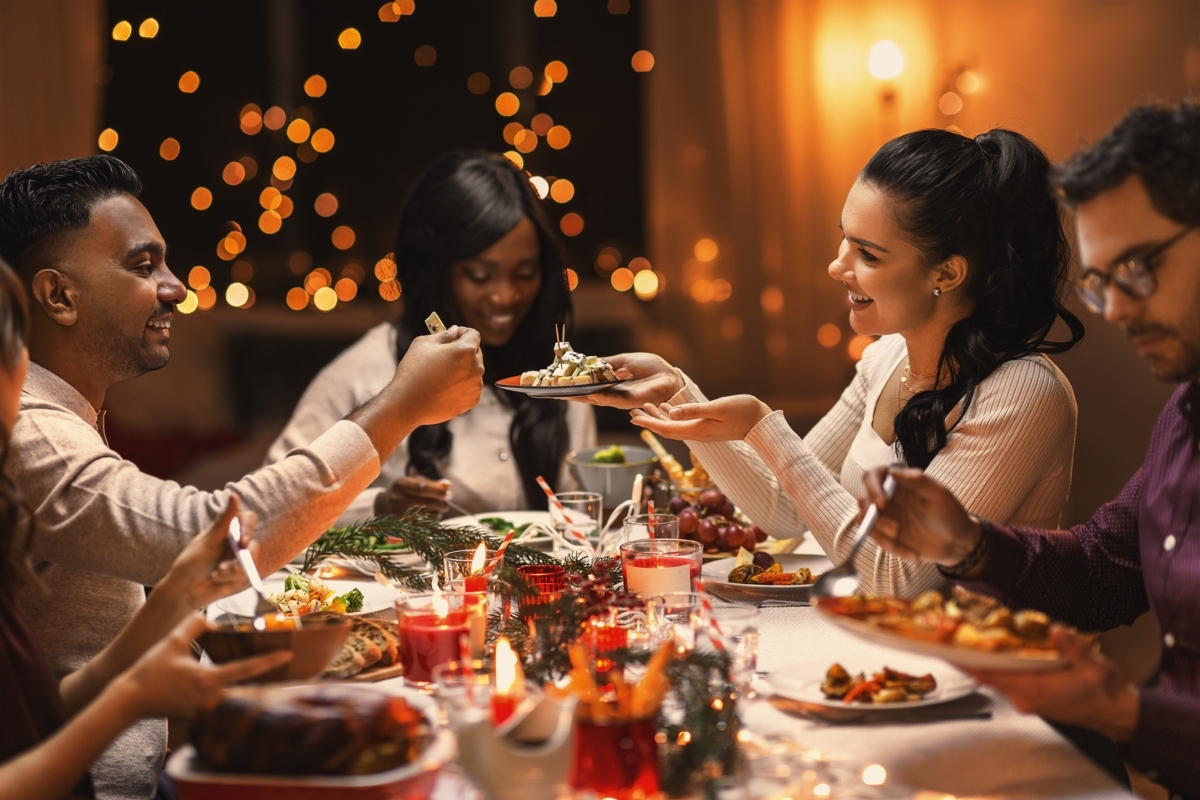
 In a world where it has become harder to feel connected, food is a powerful ritual that can bring us back to each other. The holidays can feel fraught for a number of reasons, but food may be one of the few things that connects us. Food traditions can link us across generations and deep divisions. They can be a crucial ritual in maintaining identity and care for each other.
We sometimes allow disruptors such as dieting guilt or food monitoring to interrupt the potency of our food traditions, but if we are aware of these disruptors, we can mute their effect. Setting ourselves up with food traditions, even if we start them today, can add delight to our lives for years to come.
First, let’s pause briefly and consider the power of social connection:
Social connection is a fundamental human need and foundational to our health. When we invest in our social connections, we are healthier, live longer, and decrease our risk of chronic disease. Some research now says that we need social connection as much as we need food and water. In other words, social connection is essential.
Eating together is a crucial means of social connection. Babies learn to trust their caregivers through the consistent provision of food. When someone has a need – illness, surgery, death in the family – we bring food. There is spades of research showing that families that eat together are better connected and have better physical and mental outcomes. Food contains the substance of our care for each other from the beginning of our lives to the end.
When we sit down and enjoy food together, we create a place for setting aside differences and space to strengthen bonds.
Basically, as humans, we have a better chance of thriving if we eat together routinely with a consistent group of people. Food traditions have the ability to weave the power of food-induced social connection into the fabric of our lives.
What do I mean by food traditions?
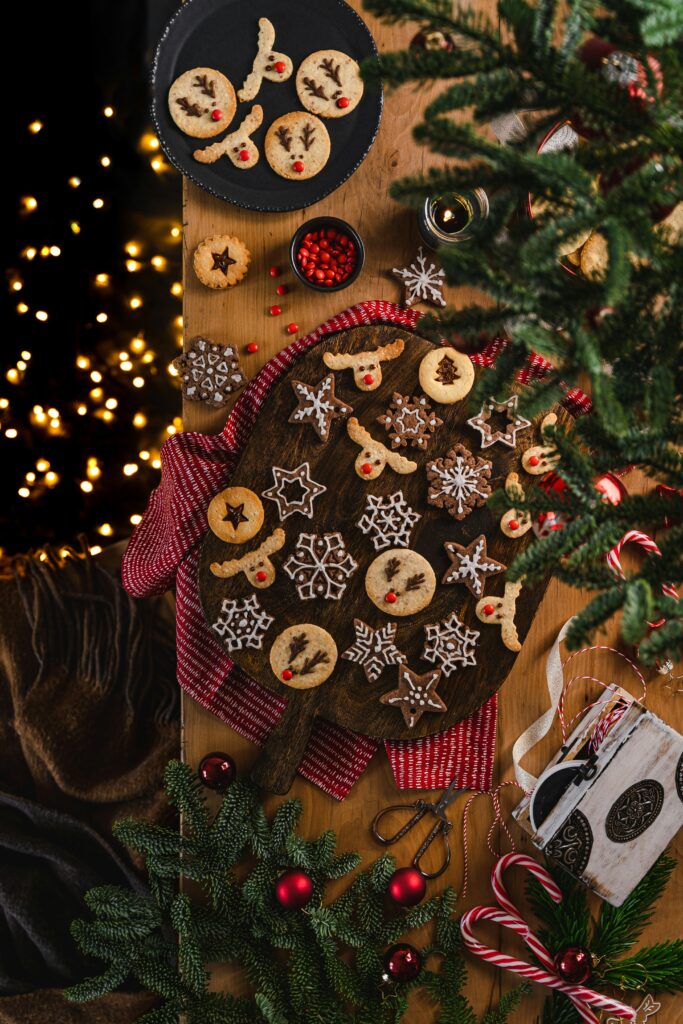 Food traditions are any foods that you eat on a recurring basis with the same people typically at the same event, holiday, or time of year. Food traditions can take place at any time of the year although they are likely to be especially prevalent over the holidays. Food traditions do not need to be elaborate or expensive; they simply need to be recurring. Sometimes food traditions have a religious or cultural significance, but this is not necessary. Food traditions may simply consist of foods you like.
Food traditions may bring to mind large families sitting down to a table full of food over the holidays, but the reality is that a food tradition does not take many foods or many people nor does it need to involve family at all. In other words, if you have coffee and dessert with your neighbor the first Friday of every month, that is a food tradition.
For me, food traditions build excitement and enjoyment around the holidays. My husband and I have many holiday food traditions, as does my extended family.
People may think of holiday traditions centering around children, but my husband and I did not have children for the first fifteen years of our marriage. Food traditions are important to me so we created our own Christmas traditions early in our marriage.
Because my husband and I are often with extended family on Christmas eve and Christmas day, we always pick a day sometime in December or early January to have our own special celebration to exchange gifts, watch a Christmas movie, play games and enjoy our annual meal. We started with French onion soup, Guiness pudding, and mulled wine. A few years in, we added shrimp cocktail as an appetizer to have something to munch on while we cook.
These traditions made our Christmas celebration special (and removes the work of having to think of a menu every year). Even though it was just the two of us for over a decade, these traditions are crucial to my enjoyment of the holiday every year. As I mentioned earlier, it really only takes two people to create food traditions.
Now that we have children, we continued many of our traditions although we changed our soup to a more kid friendly Italian wedding soup. This year, I may add sourdough bread.
My extended family – siblings, parents, nieces, nephews – has extensive food traditions as well. We love Christmas more than most people and I believe our many traditions, including our food traditions, drive that.
We have been celebrating Christmas the same way for most of my life. We typically gather on Christmas eve although we will change it if needed. The point is the gathering and not the date. We start with a seafood meal – clam chowder, crab legs, shrimp, fresh veggies – and have rotating sides depending on the year. We had fish sticks when my nieces were little, mollusks when my sister found an amazing recipe, and salmon when my husband and brother decided to grill together.
There are a lot of us – some people help in the kitchen, some people don’t. Inevitably there is a fuss about who has helped clean up and who hasn’t. (Yes, I am usually the one fussing.) The reality is that none of us would miss it for the world. And the reality is that no one can miss it because we will change the date to ensure they are there. One year, four out of five siblings were flying in from three different corners of the US, but we still did our best to have everyone there.
To be clear, we are not a picture-perfect family – we have our fair share of dysfunction and disagreements. Many of us have differing political stances and religious practices. I have taken bets on how early in the evening the first argument will break out, and sometimes it happens before dinner even begins. But our annual family Christmas is one of our connection points. It is night we prioritize and a night that we more or less know how it will unfold. Seafood dinner, gift exchange, more food (the gift exchange is quite long) including a cheeseball, eggnog, Christmas cookies, snacks and snacks and snacks. And then games until early hours of the morning until we put on the same Christmas movie every year and fall asleep in front of the tv.
My family’s Christmas traditions go back a generation. I have numerous memories of going to my grandparents on Christmas day every year where we had the same meal every year, a gift exchange, snacks, and games until early hours of the next day.
These traditions are connecting point. They are part of our family story and establish our family identity. Food traditions help us connect us through time, from generation to generation.
 In addition, food transports us through time. One bite of a food you had annually as a child has the power to immediately place you back in that space. Taste is a powerful reminder.
My mom recently made a salad that my grandmother made every holiday season and the first bite of that salad transported me into her kitchen. This recipe has a way of keeping my grandmother’s memory alive, bringing her back into the room even though she has been gone for over a decade.
Food traditions keep us connected to our roots and with the people surrounding us at the table.
While food traditions add depth and dimension to our lives, there are tensions around food that disrupt the benefits of food traditions. These disruptors can take numerous forms, but for the sake of brevity, I am only addressing two today. The disruptors I am focusing on are two prominent issues that I often see people navigating over the holidays. It is important to be aware of these disruptors and know how to deal with them.

Disrupter #1 – Dieting and guilt around food.
I have had many conversations with clients who worry about holiday foods. They love holiday foods, but feel guilty “indulging” and may worry about the impact of holiday foods on their health. In addition, if someone is on a restrictive diet for weight loss, they worry about derailing.
These feelings of guilt around food and dieting disrupt two things. First, guilt and dieting disrupt your enjoyment of food. Second, they disrupt food’s ability to connect you to other people. Although if people around you are also struggling with food guilt and dieting, then these emotions around food can be a connection point, albeit a negative one.
My advice if you are dealing with guilt around holiday food or are worried about your diet:
First, you may benefit from better understanding intuitive eating. Intuitive eating is not a free for all, but rather an approach to food that frees people from dieting and leads to a sustainable long-term approach to food and health. To read more about intuitive eating, check out previous blog posts here and here.
That being said, the holidays are not the best time to revamp your relationship with food, so put a pin in intuitive eating and let’s talk about a different way to think about food over the holidays if you are dieting or feel guilty around holiday foods.
My main advice is to remember that a holiday meal is one day out of the year. Or if you have ten events then it is only ten days out of the year. Even ten holiday meals are less than 1% of your overall meals in a year. In other words, this is not significant. Your food intake is not shaped by a holiday meal. Do not put the burden of the entire year on just a few days. Set aside food guilt and dieting rules and instead, enjoy the moment, the people, and the food. You will not regret it.
Quick note: If you need help navigating specifics due to allergies, necessary dietary restrictions or family baggage, I would encourage you to meet with a dietitian to navigate this. Necessary restrictions can feel like disruptors as well, but there are many ways to navigate this in a way that can still be inclusive rather than ostracizing. Do not navigate this alone.
My advice if people you love are vocal about their guilt around food and dieting:
Be kind and gentle towards someone experiencing these feelings. They likely have a difficult relationship with food and their body. Also, do not feed into the cycle of attaching worth to body size or shaming over food. Come prepared with topics not related to food and dieting. When dieting and food guilt come up, acknowledge the comment, then gently change the subject.
 Disrupter #2 – Family pressure around body size and food choices.
If you feel like you are being watched while you eat at family holiday meals, you probably are. We all know people who do this – monitor and make comments on other people’s food. Even if they would deny it, we all know the power of a knowing glance. Perhaps you have done it too. Neither side of the coin is a great place to be.
If you have done it, you likely feel a sense of responsibility for someone else’s health. You are deeply concerned that their choices may negatively impact them (and, in turn, you because you are impacted by their health and longevity). You likely also link body size with health.
If you have been on the receiving side, you know the horror of feeling micro-managed and may have a long history with family members monitoring your food and your body. You may have a hard time eating at family events and you may feel great discomfort unless you are eating foods that are perceived as “healthy”. It may feel like a win if you leave hungry because you have managed other people’s perceptions of you.
Let me speak first to the person doing the monitoring:
I want to speak kindly to you because I have been in your shoes – you are worried about this person and you want the best for them. But let me be clear, this is not the way to express your concern or show your love. You likely are struggling with anti-fat bias – the assumption that health and body size are connected – and you would benefit from learning more about research that debunks this.
The truth is that you cannot control other people. They make food decisions for themselves and pressure from you around food only makes it worse. Let it go. Look the other way if you have to. Do not allow yourself to dwell on critical thoughts around other people’s food intake. Instead focus on them as a person and engage with them on other topics. Enjoy who they are; ignore their food. Your relationship and possibly the health of the person you are critiquing will be better for it.
If you are being monitored:
First, let me just take a deep breath and acknowledge the gravity and difficulty of the position you are in. It’s hard. And if you avoid family gatherings because of comments on your food and/or body size, that is understandable. I would just recommend that you find a body-inclusive therapist* because this dynamic is likely impacting you in many ways, not just at family functions.
Second, if you do show up at family functions, figure out how to take care of yourself in these moments. Taking care of yourself can look a lot of different ways for different people. Here are a few ideas:
- Taking care of yourself may mean pushing back on other people or simply ignoring the comments/watchful eyes. This takes great internal fortitude and I would highly recommend the support of a weight-neutral therapist and dietitian.
- Eat before you go to the event or plan to eat something immediately after. This can take the pressure off of the food at the event, but also ensure that you are not going hungry all evening if you have trouble eating in front of people.
- If you are traveling and staying in someone’s home, be intentional about food ahead of time. Consider packing hearty shelf-stable snacks that you enjoy so that you can satisfy your hunger outside of someone’s watchful eyes. Find a way to take some time to yourself during your stay. Perhaps do a little last-minute Christmas shopping on your own or with someone you are comfortable eating with so that you can enjoy a meal out of the house and away from watchful eyes.
The goal is to satisfy your hunger while minimizing your discomfort with eating with other people. This can look a lot of different ways. And again, if you are ready and able to have the tough conversations with people who monitor you, then please do, although just know it is not your job to change them. Your job is to care for yourself and please give yourself permission to do that.
These disruptors – guilt around food, dieting, and monitoring – are tricky to navigate. Please have grace for yourself as you work through these. If you find yourself feeling at a loss or unsupported, please do not hesitate to reach out to an anti-diet dietitian or therapist to help navigate these complicated dynamics.
 Let’s wrap up with a brief discussion on creating your own food traditions:
Take a moment to reflect on foods you eat throughout the year. Do you eat any foods connected to events or seasons? You may already have more food traditions than you realize. Think about how these food traditions have connected you to people and places over the years. Sometimes pausing to recognize what we are already doing helps us see where we want to go.
Perhaps this reflection made you realize that you have few food traditions, but you wish you had more. That is a great place to be. Starting with a blank slate means you get to create food traditions right now with the people that you want to start them with.
Here are a few things to think about with starting or adding food traditions:
- Food traditions do not need to be connected to holidays. They can be any time of the year that you want to mark with something special such as the end of the school year, a summertime event, or even just every third Wednesday. A food tradition is something you do on a recurring basis with at least one other person.
- Consider using this as an opportunity to better understand your heritage or pay attention to seasonal or cultural foods. Food traditions can be a connector throughout generations. They can also tie you more closely to where you live if you explore regional food traditions native to your area or local culture.
- Any food is an option. The food for a food tradition can literally be anything. It can be elaborate and take hours to make, it can be takeout, or it can be somewhere in-between. The food tradition can include the entire meal, or just one dish. Or it can be something simple like making the same cookies every year in December.
- Start small and simple: I cannot say this enough. If I had a nickel for every grandiose plan that fizzled before it got off the ground, I would be rich. Food traditions do not need to add work to your life. Starting simply gives you a better chance of accomplishing a new tradition every year and getting the ball rolling. Small and simple changes are usually the ones that stick.
Three easy steps for creating a food tradition (adapted from Kendra Adachi’s Ten Steps to Creating Traditions):
- Pick an event that you already do every year and decide which one you want to attach to a food tradition. This can be the start of a school year, putting up a Christmas tree, or an annual summer party or weekend away.
- Ask yourself what food makes sense for that moment. Perhaps brainstorm it with the people who participate in this moment with you. Maybe you had a food last year that you enjoyed, so it could be as simple as deciding to have it again this year.
- Put it on the calendar. Just like that you have a new food tradition. Feel free to play around with it a little each year if needed. Food traditions are about enjoying food and people; be sure it works for you.

Here is a simple example of how I added a food tradition this year:
Every year my husband and I decorate our Christmas tree together. When my nieces were young, sometimes they joined us. This year, I wanted to add a food tradition to our tree decorating evening. First, I asked myself – is there a food I already have at this time of the year that would make sense? And second, I asked – what would be simple for my two young children?
Eggnog was an easy answer. My husband and I love eggnog and this will ensure our children do too. I added a little decaf espresso to mine, my husband added a little bourbon to his, and my three-year-old asked for the “Christmas milk”. Now we have a special way to mark our annual tree decorating.
A quick word on a few possible points of pain:
What if you have food traditions that you loved, but no longer continue because of a death in the family, divorce, moving, or a change in finances?
Take a moment to grieve the loss and the change, but then think about how you might revise this tradition to adapt it to your current life and people. You may be able to do something that is reminiscent of the old tradition with new people that can help carry on something that was important to you. Food traditions are beautiful in that they can easily be passed from generation to generation, but they do not need to take the exact same form with every generation. They can also shift as needed within your own life span.
What if your young children do not enjoy foods that are part of family food tradition because of sensory difficulties?
I would encourage you to avoid pressuring your child around these foods. Have them available to your child, but do not put emphasis on eating them. Or consider figuring out how to tweak the dish so that the food is more acceptable to your child. Always keep in mind that the point of food traditions is connection with people.
In summary, food traditions are powerful. They connect us to each other and create rhythms to our years. They give us moments to look forward to and memories to savor. Food traditions empower our social connections and give us richer, fuller lives.
There are many disruptors to food traditions, but being mindful of these and savvy about our approach can lessen the disruption. Don’t be afraid to play around with food traditions to help them fit into your life. It’s never too late to add a food tradition or to revive an old one. Keep it as simple as you need to enable you to do it every year. And get one or two other people on board as partners.
Food traditions are as much about the people in your life as they are about the food. Life is hard enough, let’s allow food to bring us together and to bring us joy throughout the year.
Additional Resources to continue exploring the topic of food traditions:
Podcast episode – Ten Steps to Creating Your Own Traditions: The Lazy Genius podcast has an excellent episode on creating traditions. While Kendra Adachi focuses on traditions in general, her framework is useful in thinking about food traditions as well. She helps you consider what matters to you and how to best translate that into your life.
More Than a Recipe Series: The nutrition and therapy team at A Soft Place to Land is sharing recipes and food stories that highlight how food is a core part of our human experience. Check it out to be inspired by other people’s food traditions.
*I am happy to provide recommendations for body-inclusive therapists. Please do not hesitate to reach out to [email protected] for more information.
 Author bio: Kathleen Hahn, MS, RD, LD is a registered and licensed dietitian. She received her Master’s degree in social justice issues in the food system at