
This blog post is part of a new monthly Nutrition Advice Column. Feel free to submit your questions to [email protected] or complete the form below.

Question: How do I help my kids become intuitive eaters?
Answer:
This question plagues me daily. I have a three-year-old son and a 6-month-old daughter and I often wonder if I am getting it right. The pressure around feeding children starts early. For me, it started at the very beginning.
When my son was just a few days old, I was obsessed with whether or not he was getting enough milk and growing appropriately. Was he eating often enough? Nursing long enough? Was I doing a good job?
The pressure to get feeding “right” does not diminish as children grow. My 6-month-old daughter is now starting solids and I am preoccupied not only with the question of whether she is nursing enough, but also if I am providing the right amount and types of foods. Is she getting enough food? Too much food? Should she nurse more and eat less? (Also, how do you possibly wean a child at a year old, but still have breastmilk be the primary source of nutrition until one year old??)
Worry over her growth is an ever-present hum in the background of my mind – is she gaining enough? As soon as I am comfortable that my child is eating enough, a new worry crops up – is she gaining too much, too quickly?
The neurosis starts early.
Worries about feeding are integral to how I feel like I am doing as a mother. My child’s growth and eating habits feel like a reflection on my capability as a parent.
If my child eats well and grows well, then it feels like I must be doing a good job. And I know I am not alone in my worries – this anxiety around growth and eating is encouraged by doctors, grandmothers, and concerned citizens alike.
Why do we as parents care so much about our children’s eating habits? This concern is not wrong or even entirely problematic. We are in charge of these little humans and they start out entirely dependent on us – we should care. And it is true – as parents – we greatly impact our children’s relationship with food; I do not want to downplay this.
The issue is that our best intentions sometimes interfere with our desired outcome. That is particularly true when it comes to helping our children become intuitive eaters.
An intuitive eater is someone who is able to listen to their body, understand what it needs, eat until satisfied, and enjoy foods.
The good news, however, is that helping our children become good eaters is less pressure-filled than you may imagine.
In fact, you get to set up the system and then set your child free within it. Helping your child become an intuitive eater may be more hands off than you imagine.
Stick with me and we will talk this through.
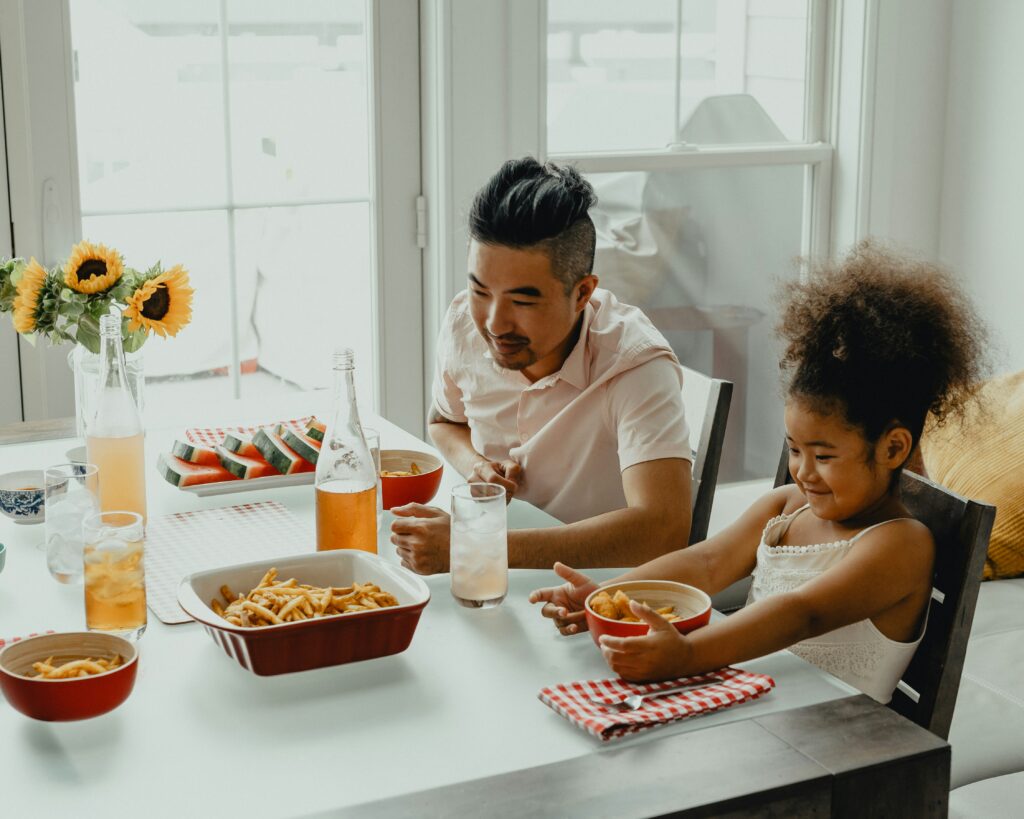
There are three main things I want you to know about helping children become intuitive eaters:
First, children are born intuitive eaters.*
The goal is to preserve this innate intuitive eating ability. According to Ellyn Satter, a dietitian and guru on raising intuitive eaters, we are born with “…positive feelings about eating, the drive to eat, the innate knowledge of how much she [or he] needs to eat, and the ability to grow in the way nature intended…” although we do need to be taught “meal habit and positive mealtime behaviors”.1
Essentially, children inherently know how much to eat and want to do well with eating, but they must be taught how to develop a pattern of eating regular meals and snacks (rather than constant grazing) and how to behave appropriately at meals.
We, as parents, do not have to teach a child how to be an intuitive eater – we, for the most part, simply need to establish structure around food and then get out of the way. This is easier said than done. We have good intentions when it comes to our kids. We want them to be healthy, make good choices, and thrive. Most of our meddling comes from these intentions.
Second, meddling with children’s eating often backfires.
There are several ways that we, as parents, grandparents, and concerned citizens interfere with a child’s ability to maintain their inborn intuitive eating skills. Most of these interferences involve pressuring a child.
- Forcing them to eat certain foods. This includes telling your child to take three bites before they can leave the table (guilty – yes, I have done this), mandating that your child cannot have a brownie unless they eat all their broccoli, or insisting that they cannot have more chicken until they take a few bites of their greens.
- Forcing them NOT to eat certain foods or managing their quantity. This usually involves avoiding or limiting sweets and certain snack foods. In addition, sometimes parents manage a child’s food quantity (of any food) because of body size (more on this later).
- Rewarding or punishing with food. This involves linking a child’s behavior to food. If your child is misbehaving, you may be tempted to threaten them with the loss of a treat. Or if you want to elicit good behavior, you may offer a reward in the form of food. Don’t get me wrong, food is a wonderful part of celebrations – I love a good end-of-the school year ice cream party. The problem happens if you make the ice cream party contingent on your child’s grades.
This pressure around food has a way of producing the opposite result. Children forced to eat their vegetables often dislike vegetables as adults. If a child is restricted from a food or if the amount they can have is micromanaged, just like an adult who is dieting – this restriction increases the food’s desirability. A child whose overall quantity of foods is restricted may end up binging later (this is a normal response to hunger). A child pushed to eat may eat less and less. This pressure is counterproductive.
Linking behavior with food creates a good/bad food narrative with food that we are trying to avoid – we want foods to be neutral. The feeding experts in Feeding Littles & Beyond note that: “…kids don’t do well with pressure – around food or otherwise. They’re not comfortable being watched as they eat. It is one of the few things in their life that they can control, and when they sense pressure they tend to push back. Hard.”
It is important to avoid battles for control over food with your child. This is one battle you will never win. You literally cannot make your child chew and swallow food nor should you want to. They are born with this autonomy and it is a line that must not be crossed.
This begs the question – why do we, as parents, meddle so much with our child’s food intake?
I get it – if I am not careful, I find myself watching my son eat and having to literally stop myself from saying things like ‘eat your protein’, ‘you can’t just fill up on bread’, or ‘at least take a few bites of your peas’. As I mentioned earlier, these meddling thoughts to some extent, come from a good place of desiring my son to be healthy and strong. And I will talk more in a bit about how to encourage eating protein and vegetables in a way that does not backfire, but before that, I want to touch briefly on my third point – a more sinister place that this meddling impulse comes from.
Third, one of the primary reasons that we interfere with our child’s eating habits is fatphobia.
Fatphobia is a major reason parents interfere with their child’s eating. Fatphobia is embedded in our culture, media, and even medicine. Growth and BMI charts can amplify this pressure, but these tools are outdated and do not reflect current population data or individual health. What matters most is a child’s overall relationship with food, activity, and emotional well-being.
If you would like to dig deeper into how BMI and growth charts shape our beliefs about kids’ health, check out our recent post on Rethinking BMI Charts for Children.
Imagine if you were not worried about your child’s body size. How would you handle food differently? I would encourage you to spend some time pondering this and then move forward as if you trusted your child’s body to grow into the shape that’s right for them.
Here are five rules to live by if you want your child to maintain their intuitive eating ability and grow into the body that is right for them:
Rule #1: Parents are in charge of the food, the timing, and the setting. This is the “what, when, and where of feeding”.3
The what: Parents decide if the child is being offered chicken, peas, and pasta for dinner or hamburgers and fries. The child can ask for cheese puffs (a common occurrence in my home), but you, as the parent, can say – no, that is not what we are having, here are your options instead.
The when: Parents decide on timing. Satter recommends providing three meals per day and snacks between meals – essentially offering food every 2-3 hours. There is, of course, room for variability here depending on your family’s needs and your children’s ages. The goal is to offer food consistently and to have your child come to meals and snacks hungry (but not ravenous).
The where: The parents decide on the setting. Experts in intuitive eating recommend sitting at a table together with your child for meals and snacks and to avoid distractions such as tv or phones. This is a great time to engage with your child and make food intake pleasant. This helps everyone at the table tune in their hunger/fullness cues and actually taste the food they are eating.
A quick word on nutrition: I would encourage you to think about protein, carb and fiber when deciding what to offer for meals AND snacks. And think about the overall picture. In my home, that means if we have pancakes and fruit for breakfast, the morning snack will likely include something high fiber like popcorn and high protein like cheese. If we have cookies and milk as an afternoon snack (milk helps balance out the carb), we likely will not have dessert with dinner.
A quick word on sweets: Sweets absolutely can be a wonderful part of a balanced diet. I would encourage you to incorporate treats to help teach your child how to manage them. Children can handle their treat intake well if there are two structures in place: regular balanced meals/snacks and autonomy with food.
We do not want children filling up on treats and displacing necessary nutrients in their diet, but we also do not want a child ending up with an increased taste for sweets because they were restricted or overly managed.
Here is an example of how sweets might be handled:
My son gets to choose how many cookies he is eating as a snack, but if we have dessert with dinner then I give him an appropriate portion size. Allowing him to have as many cookies as he wants as a snack (when this is the primary food we are having) gives him an opportunity to avoid the restriction-induced desirability effect. But limiting him to a portion size of dessert at dinner prevents him from filling up on sweets and ensures he still eats a variety of foods.
If you have been restricting/managing sweets and want to work through increased autonomy around these foods, I would encourage you to read Ellyn Satter’s book on raising good eaters.
Rule #2: Children are in charge of what they eat (from what you offer). This is the how much and whether of eating“.3
If you offer chicken, pasta and peas for dinner, but your child only wants to eat chicken, you do not get to say boo. If they want to skip a snack or a meal, they can. But they do not get to come begging for more food before the next meal or snack. If they skipped the snack or a meal, they skipped it – food will be provided in another 2-3 hours. But the child chooses every bite they take or do not take. This is key for your child’s autonomy.
A quick word on introducing new foods: Children often need many exposures (sometimes 20+) to a new food before they try it. So do not get discouraged if your child does not eat a new food, just know that it can take time. In addition, always include a food you know your child likes when introducing a new food if you are uncertain as to how your child will react to the new food. This gives your child exposure to new food, but safety in the food they are comfortable with.
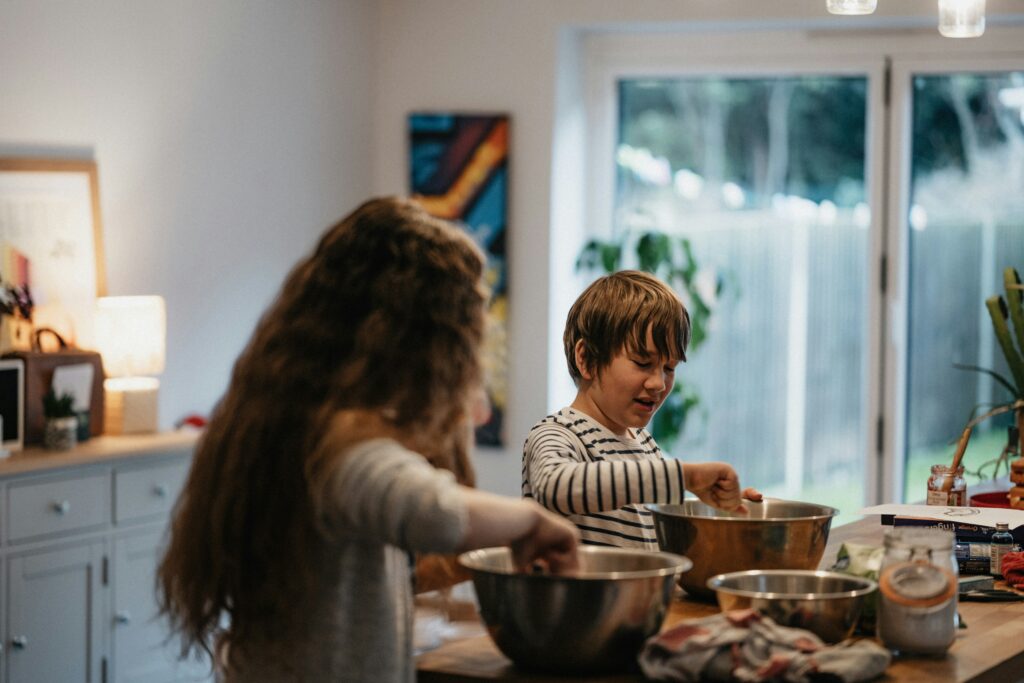
Rule #3: Engage with your child about food.
Offer age-appropriate information about food: “Protein helps your muscles grow strong.” “Fiber helps you poop.” And so on. For younger children, sensory engagement is key – talk about the appearance, texture, and taste of food. I did a preschool activity with my son about apples where we played with apples, did taste tests with a variety of apples, and read books about them and now he wants to eat apples whole whenever he sees one.
Involve your child in the kitchen: I don’t care if you are just heating up leftover takeout – teach them to use the microwave, have them select takeout foods while encouraging them to think about different food groups. Involve your child in whatever level of engagement you have with food. When I chop ingredients for dinner, my three-year-old loves to put them into a bowl for me. I always let him taste the foods (unless I am chopping raw chicken, of course). This once led to him eating fistfuls of raw red onion and claiming to love it.
Rule #4: Pay attention to how you talk about food and your own body.
As a parent, our food habits and attitude towards our bodies speak volumes. Our children learn from our relationship with food and often imitate our behaviors. If a parent spends a lot of time dieting or berating their bodies, children are likely to do the same.
BUT the beauty is that you do not need to have your own relationship with food fixed before you can help your children become good eaters. You can actually learn from your children if you go through the proper motions.
Satter notes: “Raising a competent eater will enhance your own competence with eating. Even if you are still struggling to “get it” with respect to your own eating attitudes and behaviors, if you go through the motions of positive feeding – keeping your lips zipped, your fingers crossed, and the look of disbelief off your face – your child will show you what competent eating is all about”.4
If you live by the rules outlined above, your children can actually teach you what your own relationship with food and your body might look like.
Rule #5: Hold your nerve.
I am starting to think that much of parenting is just holding your nerve. While we, as parents, do our best to teach our children, guide them, and create systems within which they can be successful, so much of what I do every day is bite my tongue and let my children do their best.
Sometimes we have a few weeks where I give my child balanced meals and it seems all he does is eat the crackers or the roll or whatever grain happened to be on the plate that day. I desperately want to bug him and say ‘eat your broccoli or chicken’ or whatever. But then suddenly he switches and he is eating the entire sandwich or all the fruit on the plate or eating fistfuls of whatever vegetable I am chopping that day.
It is important to remember that “Raising a good eater takes years. Children learn bite by bite, food by food, meal by meal”.4
In addition, the good news is that even if your children only eat chicken nuggets or if they go ape over sweets – it’s not too late. It is never too late. That is the beauty of children and the work of raising them – we can always go to them, tell them we made a mistake and that we are going to try a new way now. Even if your child is nearly grown, they will likely learn something from your new approach. The goal is not perfection – the goal is learning and growing together. And the goal is enjoying good food together. That is always the goal.
If you can sit down with your child and enjoy food together and make food an enjoyable, pleasurable moment in the day (no matter what that food is), this creates a massive bandwidth of grace for feeding mistakes you might make.
In summary, trust that your child knows how to eat. Trust that your child will grow into the body they are meant to have. Hold your nerve when you offer your child food. Acknowledge the role that fatphobia may be playing in your approach to feeding your child. And finally, enjoy your food, enjoy your child, and eat together. These days will be gone before we know it.
One final thought:
I do want to briefly mention that there are many additional barriers that I did not discuss including food allergies, medical conditions, food access, and co-parenting challenges – each of these warrant an entire blog post on their own. If you find yourself attempting the above approach, but feeling stuck, particularly due to things outside of your control, please do not struggle alone – reach out to a dietitian who specializes in intuitive eating for one-on-one guidance or seek out additional resources. Food can be fraught – you do not need to navigate it alone.
Resources:
- Secrets of Feeding a Healthy Family: How to Eat, How to Raise Good Eaters, How to Cook by Ellyn Satter
- Fat Talk: Parenting in the age of Diet Culture by Virginia Sole-Smith
- Find a dietitian certified in intuitive eating HERE or feel free to reach out to us at Eat Well Collective – I am certified in intuitive eating and I love working with families.
* Neurodivergent children often have unique feeding challenges including extreme food selectivity and texture aversions and these children may need modified approaches or professional support. In addition, there are some medical conditions that interfere with a child’s ability to sense hunger and fullness although these are rare.
References:
- Secrets of Feeding a Healthy Family by Ellyn Satter page 60
- Secrets of Feeding a Healthy Family by Ellyn Satter page 66
- Secrets of Feeding a Healthy Family by Ellyn Satter page 5
- Secrets of Feeding a Healthy Family by Ellyn Satter page 56
I would love to hear your thoughts on this topic. Please do not hesitate to get in touch via email at [email protected]. In addition, feel free to reach out if you have a nutrition question that you would like answered in this advice column. All questions are posted anonymously.
If you would like to work directly with a dietitian at Eat Well Collective, feel free to contact us at here or schedule directly here.