
What If the Problem Isn’t Your Body, But Your Clothes?
“…the human person is composed of three parts – soul, body and clothes.” – William James

As a dietitian, I spend my days helping people build a healthier relationship with food and their bodies. That work has led me somewhere unexpected: clothing.
You may think, what does clothing have to do with nutrition? Let me tell you, clothing has EVERYTHING to do with nutrition.
Clothing and Body Image: Why Clothes Feel So Personal
Clothing is powerful. We all know the ability of an outfit to communicate confidence, class, and position. Clothing shapes how people view us.
Not only do our clothes communicate a message to those around us, our clothes communicate a message to ourselves.
Clothing gives us feedback on how we feel in our bodies. An ill-fitting shirt makes us feel uncomfortable. Tight pants make us think we need to lose weight. No matter our size, we feel pressure to fit into a smaller size.
Clothing is a tool of diet culture designed to make us think we need to shrink or reshape our bodies.
Like many people, I experience this first-hand. I have spent years feeling intermittently uncomfortable in my body, and only recently have I started to understand the role that my clothing plays.
This past Thanksgiving, I wore a beautiful sweater to a family gathering. It was cozy, soft, and flattering. I felt good in it…until I started moving around. The sleeves constantly fell into the food while I cooked, and the neckline shifted with every movement.
Instead of focusing on the people around me and paying attention to the conversation, I found myself endlessly distracted by my sweater. The sweater felt like a toddler demanding constant attention and as someone who already has two small children, I do not need another distraction.
Clothing has a long history of playing an outsize role in how I feel in my body.
So often, confidence with the clothing I wear translates into confidence I carry into interactions with the people around me.
When a piece of clothing pinches or moves around in a way that is bothersome, or if I do not like how it makes me look, it has a direct correlation to making me feel insecure and anxious. Fidgeting with a piece of clothing drives internal feelings of discomfort.
The inverse is also true. When I feel good in an outfit and if I don’t have to think about my clothes, it frees me up to be present with the people around me. A good outfit is an automatic confidence booster. The feeling is subtle, yet powerful.
Side note: It makes me wonder whether men experience clothing differently, given that women’s fashion has historically prioritized appearance over comfort. Do men start with a baseline of confidence simply because their clothing seems to be better fitting? Clothing has long been a tool of oppression wielded against women, designed to keep us physically preoccupied and mentally distracted. The corset is gone, but the underlying dynamic has not changed as much as we would like to think.
How Fashion and Clothing Sizes Shape Body Dissatisfaction
There is a reason that many of us, women in particular, fight with our clothing and our bodies. Let’s take a few minutes to better understand how we got here.

Clothing has been defining gender roles for centuries. Women’s clothing has long represented their role in society. It is no mistake that when women had few rights in the world, their clothes were extraordinarily restrictive (think corsets and layers of cumbersome dresses). Much like women were banned from the professional world of men, women were banned from clothes that were considered masculine. Literally. Laws existed that could land a woman in a psych ward if she tried to wear pants.1 As women gained rights in the world, their clothing changed. In fact, suffragists “argued that a woman’s freedom began with her clothes”.2 Clothing is powerful and, I believe, both sets the tone and reflects women’s power in the world.
Women may no longer feel pressured to wear corsets (although when I look at outfits worn at the recent Met Gala, I am not so sure), but our clothing, women’s clothing in particular, continues to draw precious time and attention away from existing with ease in the world. Clothing is yet one more way that so many of us are made to feel uncomfortable.
Why Modern Clothing Often Makes Us Feel Uncomfortable
The advent of ready-to-wear clothing, fashion’s emphasis on youth, and the sizing of clothing have conspired to make us feel uncomfortable in our bodies and as though our bodies should be a small one-size-fits-all.
Before the industrial revolution, clothing was tailored to the body and could be adjusted for a body that changed over time. No one was trying to fit into a size zero because sizes didn’t exist. This is not to say that people were not trying to shrink their bodies. Humans have a long history of trying to control their weight even though for a long time there was no consensus on if we were too small or too big.
But did clothing that was tailored to the body call attention to physical changes like our current fashion does? It’s hard to say, especially because styles were different, but the reality is that our current fashion, fast fashion in particular (aka cheap, poor-quality clothes), heightens our perception of our bodies and their changes.
Our bodies naturally change over time. Very few people end up with a body that is exactly as it started. The problem is not that our bodies change, but that the fashion industry makes us think they shouldn’t. One of the ways fashion does this is through the inflexibility of clothes. I have had several clients who, in lieu of a scale, use the fit of a pair of pants to check their weight. That is how rigid clothing can be.
Clothing has not always been this rigid, even clothing bought off the rack. I was shocked when I read that McCardell, a fashion designer in the mid-1900s who revolutionized women’s clothing, encouraged women who bought ready-made-wear to cut, change, and adjust the clothing to fit their own bodies.3 She even added extra fabric into her designs so that women could do just that. It is hard to imagine a world where women had the skills to do this, much less a designer who created clothes for the masses with such intentionality.
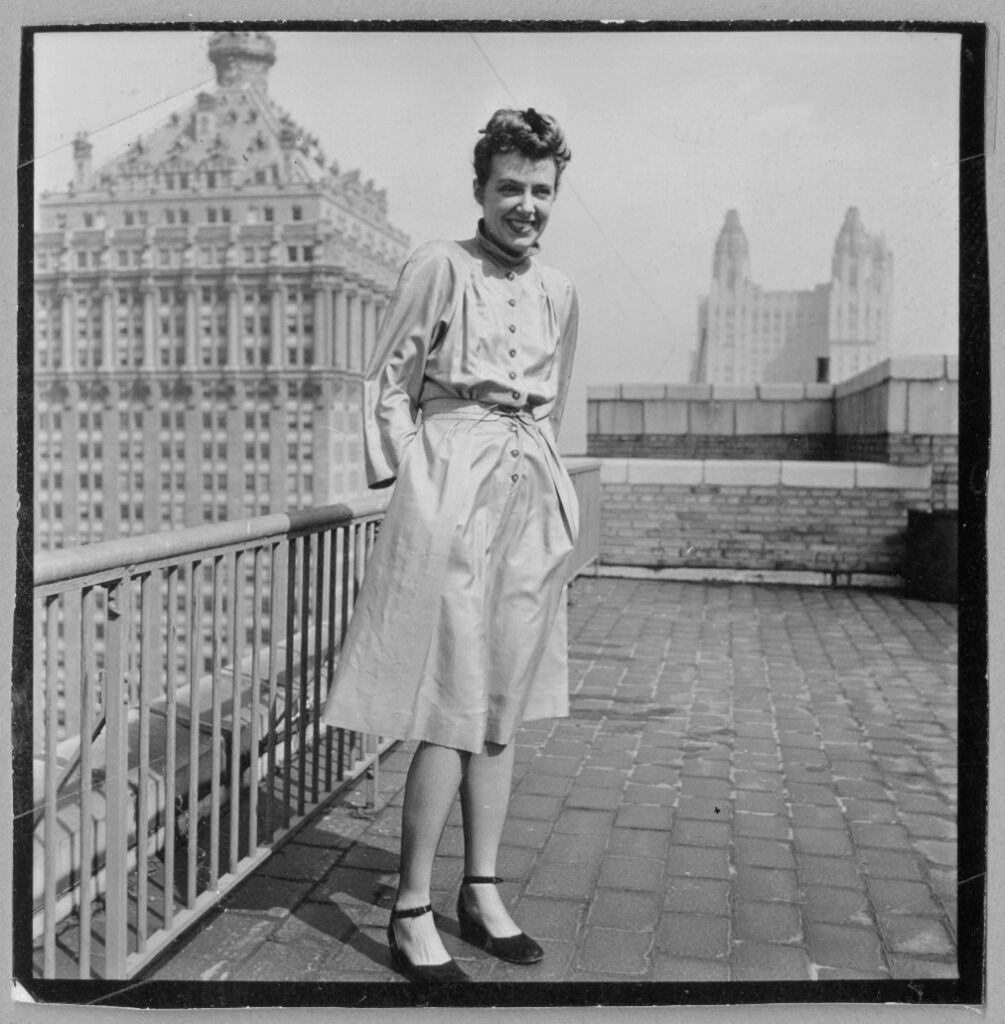
Image above: Claire McCardell
Another way that the fashion industry makes us think that our bodies should not change is that much of fashion is geared towards young people, making it difficult for anyone over the age of 40 to find clothes they like. This emphasis on youth reinforces the idea that aging and physical changes are unacceptable.
Not only is youth idolized, so are smaller bodies through clothing sizing. Clothing has long been used to shape women’s bodies into an “idealized form” and fashion continues to be used to make women feel like their bodies should be smaller or shaped a certain way.4 As Garance Doré, a French fashion photographer, illustrator, and writer, points out – So much of fashion does not fit well because “… clothes are cut to look good on models, and for any other body type [which is to say MOST bodies], it will be a struggle to make them look great”.5
This is by design. Not only is fashion designed for models, clothing sizing contributes to the idea that our bodies should fit into a so-called norm. This is similar to how the introduction of the body mass index (BMI) made people feel like they should be the average weight rather than recognizing that our bodies are naturally a wide range of weights.
Just like BMI, sizing has been problematic from the beginning. Sizing for women was created primarily based on the bodies of white women and “[fails] to capture the true range of body types in America”.6 When sizes offered by the fashion industry do not meet people’s needs, it can feel like there is something wrong with your body.
The fashion industry has historically been out of touch with most women’s body size and proportions and focuses primarily on small bodies. At times this is overt, like the Brandy Melville brand that only offers small or extra small sizes and claims to be “one-size-fits-all”. More often, this is emphasized through advertisements that highlight smaller bodies in images, magazines, websites, and marketing campaigns.
This focus on small bodies is completely out of touch given that the average woman is a size 16-18. Yet this average size is considered “plus size” and many brands do not offer these sizes. Calling the average woman ‘plus size’ implies that this size is ‘out of the norm’, which is stigmatizing.
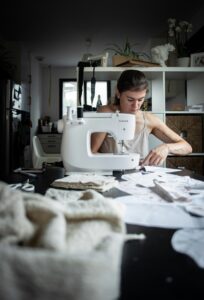
Furthermore, so-called ‘plus size clothing’ proportions are based on size 0-6 women. I am not a fashion designer, but even I know how ludicrous that is. Of course our clothes make us uncomfortable when they have no bearing on our actual body size and shape. It would be like an architect designing a mansion by simply scaling up the dimensions of a studio apartment. That mansion would have one room without interior walls. And yet we let fashion designers get away with this all the time. Fashion designers must tailor different size clothing to different body dimensions because we have varied bodies.
What If Clothing Fit Our Bodies Instead of the Other Way Around?
What if the problem is not our bodies, but our clothing? What if we believed our clothing should fit our bodies, not the other way around? What if we embraced that it is normal for our bodies to change over time and that means our clothing will change too?
Imagine if we approached clothing with that same sense of ‘if the clothing does not fit well, I will change it’, rather than allowing clothing to give us a pervading sense that our bodies need to be adjusted in some way. Most of us may not have the skills to alter our clothes, but we do have the power to expect that the clothing we purchase will fit us well.
I think this expectation could be revolutionary.
We have come a long way with clothing and we have a ways to go, but I believe when we change our approach to clothing, we can change how we think about our bodies.
I appreciate McCardell’s mindset towards clothing. She had firm expectations that clothing was to be in service of our bodies and our lives, not the other way around:
“[McCardell] advocated for women to be themselves, to be comfortable, to be honest about their needs and desires, and not to fall victim to the whims of fashion.” A woman “must dress for her temperament. She must dress for her life. Physical ease is important; and even more important, mental ease.”7 “Our clothes are far more than vehicles for adornment; they can and should be the foundation for pursuing our fulfilled and purposeful lives.”8
We are not helpless in the face of the fashion industry pushing a fatphobic agenda designed to make us uncomfortable in our bodies.
We can do something to change how we exist in the world.
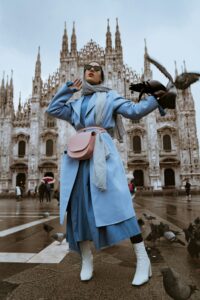
We can take steps to ensure our clothing serves our bodies and the lives we live.
How to Build a Personal Style That Supports Body Trust
In addition to holding the fashion industry accountable through how and where we spend our money, we can be intentional with our style and embrace the bodies we have rather than letting fashion dictate our style. Garance Doré’s approach to finding your own style can be a useful framework.
Doré’s Four Pillars to Finding Your Own Style:
Know yourself
“Knowing yourself is knowing the distance between your dream self and your real self.”9
For me, this means understanding my stage of life. I currently work from home and my free time is spent chasing kids around a playground. I am no longer working in a clinic every day. This is a mental shift that I keep in mind when shopping. When looking for a new piece, I ask myself when I might wear something and how well it works with my current life. My stages will change and so will my clothes, but for now I need easy outfits that hold up well to sticky hands and climbing up play structures.
In addition, I do not want to think about my clothes more than I have to. I prefer less variety and higher quality. I prefer to rotate through the same outfits each week. When I find a piece I like, I buy several. When I find a brand or a store that I like, that’s where I browse when I need a new outfit.
Know your body
So much of current fashion is geared towards a body type that most of us do not have. If it feels hard to find clothes that look and feel good, it is because the fashion industry is pretending that we are all models. It can be helpful to understand your body type and the cuts/styles that are flattering for your particular body and style.
Doré sees this as an “opportunity to narrow [her] choices and edit. And less (choices) is more (style)”.10 We all know how paralyzing too many choices can be. Knowing your body and dressing accordingly can be a way to cut through the noise and make it easier to choose your style.
For me, this includes embracing changes and replacing clothing that no longer fits. After my second baby, my body changed. For a minute, dislike for my body reared its ugly head, but then I realized I just needed different clothes. I needed clothes that fit my postpartum body in a way that I liked. This doesn’t mean powerlessness. I saw a pelvic floor therapist for a year to help heal diastasis recti. But changing up my clothes has been just as important.
I want to be the sort of person who can mourn physical changes, but then pick myself up, dust myself off, and move forward. I want to appreciate and embrace all that my body does for me and all that it has given me.
Know what you want to convey
“Our clothes carry the message we want to convey to others, and it changes, depending on what we’re going through in our lives. Knowing what you want to say makes clothes your best friends.”11
For me, at the moment, I want my clothing to say that I am comfortable and move about in the world with ease. I want my clothing to say that I am a classy mom, a thoughtful dietitian, a thinker, a writer. It might sound a little funny to you to ask my clothing to convey this. It sounds a little funny to me too. I don’t even know exactly what it means to expect this of my clothing.
But I want to find out.
Know who you want to be
“This is the dimension of dreams. This is where you add that extra touch to your style that makes it an expression of your deeper self. What are your dreams? The ones you might achieve and the ones that will always stay dreams? Those unattainable dreams are to be cherished as well; they say so much about who we are.”
“Are you reaching for a new career? Looking for love? Go on and dress for it”.12
This does not have to be complicated. Perhaps you are a jeans and t-shirt person and prefer to rotate through the same three pieces. Make those the best possible pieces. Pieces that you love. And make no apologies for being a jeans and t-shirt person. Embrace it.
For me, this means I wear lipstick when I go out. I love wearing lipstick. In this stage, I often do not wear makeup, but lipstick makes me feel dressed up. I also get a haircut regularly. I had short hair for years and then, on a whim, I grew it out for a few years. I no longer felt like myself with long hair. Now my hair is short again and I plan to keep it that way. It’s part of my personality.
Essentially, the summary of Doré’s four pillars to understanding your style are geared towards knowing yourself and being intentional. This is the beauty of style – it can be whatever you want it to be. And you can start anywhere, at any time. I have spent most of my life cycling through fast fashion and in the past, I have not given much time or effort to developing my style.
And to this day, no one looks at me and thinks – there goes a style icon. I know this for a fact because I have sisters and no one tells you the truth about your fashion like a good sister. But I am mostly at peace with this about myself. My goal is to understand my style and body enough that I can be at ease in my clothing and ultimately, my body. I would encourage you to do the same.
In fact, research shows that regardless of how we feel about our age or getting older, wearing clothing that we like and that fits us well, helps us feel good about life in general.
Practical Ways to Address the Cost of New Clothing
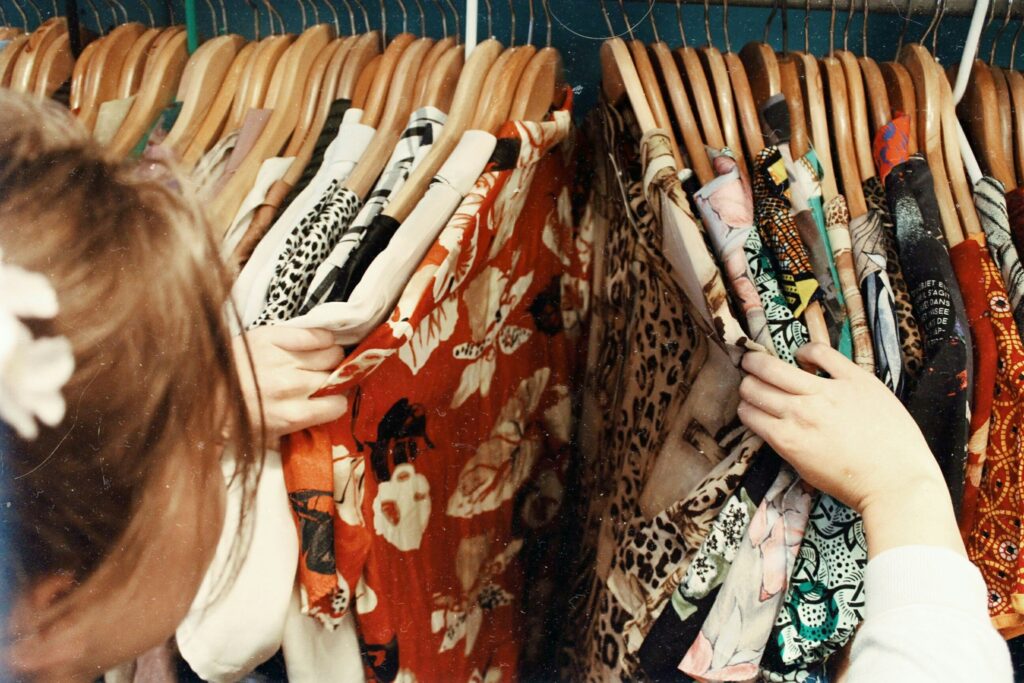
What if it is too expensive to buy new clothes? I hear this often, and it is a valid point. While some of us can buy less clothes overall and, in turn, have more funds for higher quality, more expensive pieces, some of us do not have the funds to buy new clothes often. Here are a few ideas if that is the case for you:
- Talk to your friends about organizing a clothing swap.
- Visit a thrift store for bargains.
- Find an organization that is working to address this such as the Confidence Closet — Embody Confidence Counseling and Coaching. This is a safe place for diverse body sizes. You can schedule an appointment to select free pieces that fit you well.
- It may be too expensive to replace everything in your closet all at once, but consider if you could budget monthly or every few months for at least one new piece that you purchase with intentionality.
Clothing, Confidence, and Feeling at Ease in Your Body
I want to end with a few thoughts on style from two of my favorite fashion icons. I have said a lot about the importance of clothing and how it makes us feel. And I stand by everything I just said. And also, style and how we feel in our bodies goes deeper.
“…”Style is about so much more than the clothes we wear. It’s the way we walk, the way we smile, the sparkle in our eyes, the way we live our lives. Style is a universal language, and it has the power to connect us.” – Doré
“As much as I love fashion, I agree that true elegance is found elsewhere. It’s in the way we behave with others.” (183) – Doré
“…I discovered the joy of connecting, which to this day defines everything I am…If I make people feel good, if I encourage them to be themselves and be at ease, then I feel happy and present. To me that’s the heart of elegance.” – Doré
…”Stay firmly you. And if Fashion seems to be saying something that isn’t right for you, ignore it.” – McCardell
In summary, if you are unhappy with your body, ask yourself what role clothing is playing. Take time to be intentional with your clothing. Get rid of anything that does not fit your current body and life. So often we hang onto that old pair of jeans because we want to go back to a time in our lives that we think was better. To move forward we often need to let go of the past or a self you thought you would be.
Letting go of the past and our old selves and old bodies can be immensely difficult and full of grief, but when we decide to move forward instead of forever looking over our shoulders, we become open to all the beauty and delight that our lives can contain right now, in this present moment.

Additional resources, just for fun:
- Color analysis: We all have certain colors and tones that make us pop. I know a few of my colors because whenever I wear vibrant blue or a rich purple, I always get compliments. It’s fun to understand this because wearing your colors is an automatic confidence booster. You can pay a professional to help you determine your colors or you can elicit the help of your best friends and the internet’s many guides.
- Understanding your body shape: It takes some work to understand this, but understanding your silhouette can narrow down what looks good. Here is one resource: How to Dress Your Body Shape: What Actually Looks Good
- Clothing matters for men too – here is a male-specific guide: A Beginner’s Guide: 16 Essential Style Tips For Guys Who Want to Dress Better — The Essential Man
- Brand options: Check out a previous blog post for a few clothing brand ideas that offer diverse sizes: How to Navigate Summer Body Image Triggers – Eat Well Collective
- Social media: Inspiration can be found on social media although I would be careful to follow diverse bodies or bodies like your own. If any social media accounts increase your dissatisfaction with your body or make you feel unsettled, these are not helpful accounts for you.
- Emily Ho is one of my favorite fashion Instagram influencers – she has such pizzaz: Emily Ho | Plus size style + writer (@authemmie) • Instagram photos and videos