

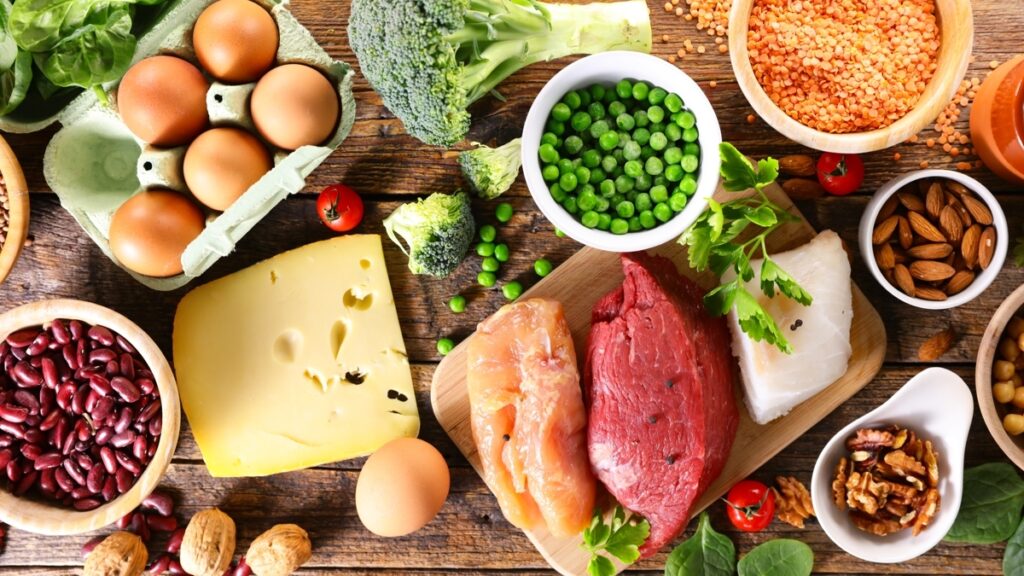
Question: How much protein do I need? Should my kids drink protein shakes? And are protein chips better than regular chips?
Answer:
These are great questions. The American food industry and social media are OBSESSED with protein. You can’t turn around in the grocery store right now without bumping into something with protein added to it.
But don’t be fooled, favoritism is fickle and the winds will change.
But in the meantime – what are we to do with protein? What is fact and what is fiction? Should you eat more? Are chips with protein better for you? What about added protein in oatmeal, yogurt and even water?
I will answer all of these questions and more, but first, what is the deal with our hyperfocus on one nutrient and why do we keep doing that?
Naturally, I think it has to do with diet culture. Surprise, surprise. You may be familiar by now with my tendency to blame diet culture for most of our weirdness when it comes to food.
Diet culture spurs the obsession we have with using our diet to shrink our bodies into a so-called optimal size (aka always smaller) and to ‘fix’ them into optimal health. Diet culture disregards the fact that genetics and a host of social and environmental factors impact our health (source).
Diet culture creeps even further and encourages an obsession with youth and ‘not dying’. In general, I think most Americans have an aversion to thinking or talking about dying, but we also get a little preoccupied with hanging on to our youth.
We often turn to food to crack the code of the fountain of youth and optimal health. Protein currently promises to give us strength, shiny hair, smooth skin, weight loss, and longevity.
In addition to diet culture making us think we should be young and small (sounds so stupid when you say it out loud), the food industry loves to capitalize on any food craze. The food industry knows trends sell. If adding the latest nutrition fad to products gets people to buy more, you can bet it will start showing up everywhere.
I remember when I first encountered tea bags with probiotics. I nearly snorted. I apologize if you like to get your probiotics with your morning tea, but the food industry could care less about effectiveness. Probiotics are living organisms. If you heat a probiotic, you will kill it. If you like drinking dead bacteria with your tea, by all means do not let me stop you, but do not expect it to help your gut health.
I digress.
Between diet culture and the food industry, we will likely continue to cycle through hyped ingredients. But for now, back to our current starlet, protein.
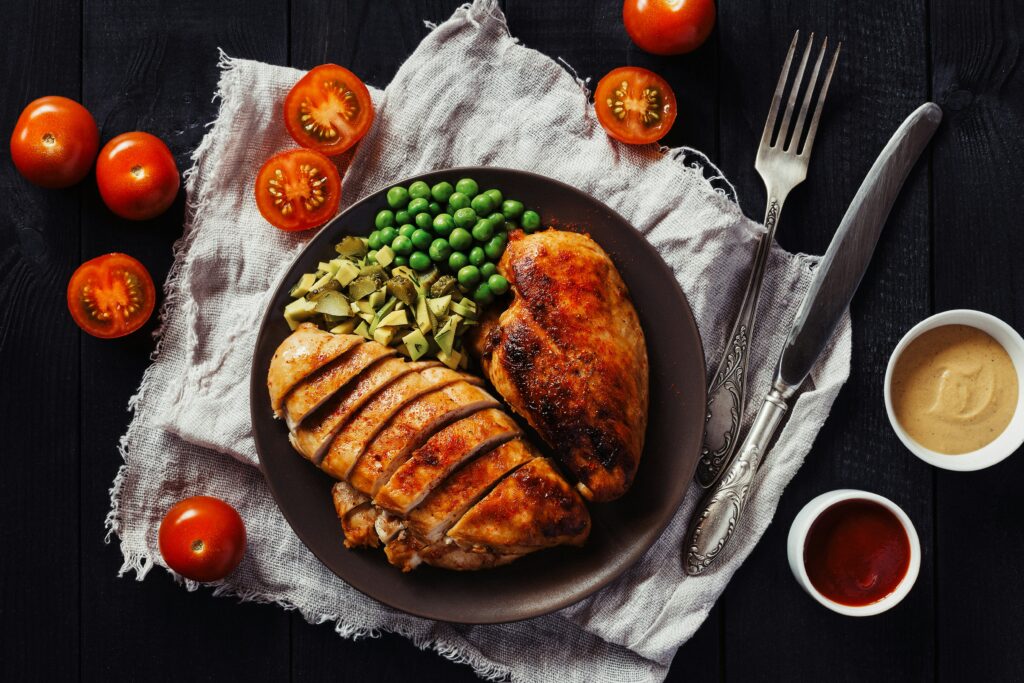
What is protein and why do we care about it?
To be completely transparent, I am a fan of protein and I have been trying to get many of my clients, especially older women, to eat more protein for a long time. It is an important nutrient (one of many) and it helps us with just about every process in the body, including supporting nearly every system in the body.
WHAT PROTEIN DOES
Just about everything. Our bodies are constantly repairing themselves and they need protein to do so. In addition, if we cut ourselves or break a bone, then our body uses protein to put itself back together. Protein helps with hormone regulation, carrying nutrients around the body, and keeping our immune system running. It also helps kids to grow.
Not getting enough protein means you will likely get sick more often and lose muscle mass. Losing muscle mass decreases metabolism and will likely impact your strength and balance over time. Hence my push for some older clients to eat enough protein.
We will get to ‘how much to eat’ in just a minute, but first, let’s discuss food sources of protein.
PROTEIN SOURCES
Understanding proteins as ‘complete vs incomplete’ is crucial to understanding how much protein you should eat and whether or not the protein added to your chips is doing any good. So stick with me here.
Proteins consist of 20 different amino acids. Amino acids are the building blocks of protein. Our body can make 11 of these amino acids so we do not worry about getting them from our diet. But 9 of these amino acids need to come from our food – these are the ‘essential amino acids’.
Complete proteins include all of these 9 essential amino acids. Incomplete proteins do not, although if you eat a combination of incomplete proteins, it can give you all the essential amino acids that you need.
Complete proteins:
- Animal sources: chicken, turkey, beef, dairy, eggs, milk, fish
- Plant sources: soy, quinoa, chia seeds, hemp seeds, buckwheat
Incomplete proteins: beans, peas, lentils, nuts, seeds, whole grains, vegetables
(Source)
 SIDE NOTE ON PLANT PROTEIN
I have had clients tell me they get enough protein from vegetables. Maybe. The reality is that if you rely on getting enough protein from spinach alone, you need to eat at least 4-6 cups per meal to get enough. That is a LOT of spinach.
In addition, spinach does not have all of the essential amino acids that your body needs, so trying to get your protein from one vegetable is a fool’s errand.
However, it is true that if you eat a wide variety of vegetables (and lots of them!), you may be getting what you need. BUT I would highly recommend that if you are focused on plant sources of protein, that you include a wide variety of plant-based sources of protein such as beans, soy, seeds, and so on and not rely on vegetables alone for your protein.
If you prefer plant-based sources of protein, there are four things I want you to keep in mind:
- You likely need a B12 supplement. Please talk to your doctor or dietitian about this.
- Variety: It is harder to get enough of the essential amino acids if you primarily focus on plant-based sources of protein. This just means you need to eat a wide variety of plant protein.
- Quantity: You may need more sources of protein than you think. I normally recommend eating between 20-30 grams of protein per meal to ensure you are getting enough. One cup of quinoa contains only 8 grams of protein, so this means eating at least 2 cups of quinoa plus a few other sources of protein at the meal. In addition, plant protein is harder for the body to digest, so you may need more protein overall than someone who eats animal-based proteins.
- Side effects: Plant protein can cause uncomfortable bloating and gas for some people because of the fiber. A client came to me once for significant IBS symptoms and we changed his soy protein intake, added more variety, and his symptoms resolved.
This is not meant to discourage anyone from relying primarily on plant protein. I love plant protein and feel great when I focus on more of these than animal protein. But just know it does take some intentionality to stay well-nourished with plant protein alone although it can be well worth it.
All right, back to protein in general.
HOW PROTEIN IMPACTS HEALTH
I fell down a rabbit hole trying to understand current research on protein recommendations and how quantity and type impact health. To be honest, I came out more confused than I started. There are SO many factors that impact our health and so many factors around how food impacts individual people.
I am going to stay out of the weeds (because, seriously, those weeds will choke you), but essentially what I understand the research to say is exactly what most grandmas have been saying for generations – eat enough protein, but not too much and eat your fruits and vegetables.
In addition, most of us could stand to add in more plant-based whole food sources of protein (aka beans, nuts, soy) because it is pretty clear that plant protein offers heart health benefits (source). And if you eat animal-based protein, keep in mind that what the animal eats matters too.
I would also encourage you to cook once in a while and invite someone to join you. There is a social aspect to our health that we do not fully understand and sharing food is a great way to accomplish this. But that is a whole other soapbox for another time.
HOW MUCH PROTEIN DO I NEED?
The new dietary guidelines have added to the protein hype because they increased the recommendation for how much the average adult needs. There is some controversy around this, but let’s break it down.
Previous guidelines:
Recommended 0.8 gm/kg per day. For a 150-pound person, this is 54 grams of protein per day.
In real life, this is not that hard.
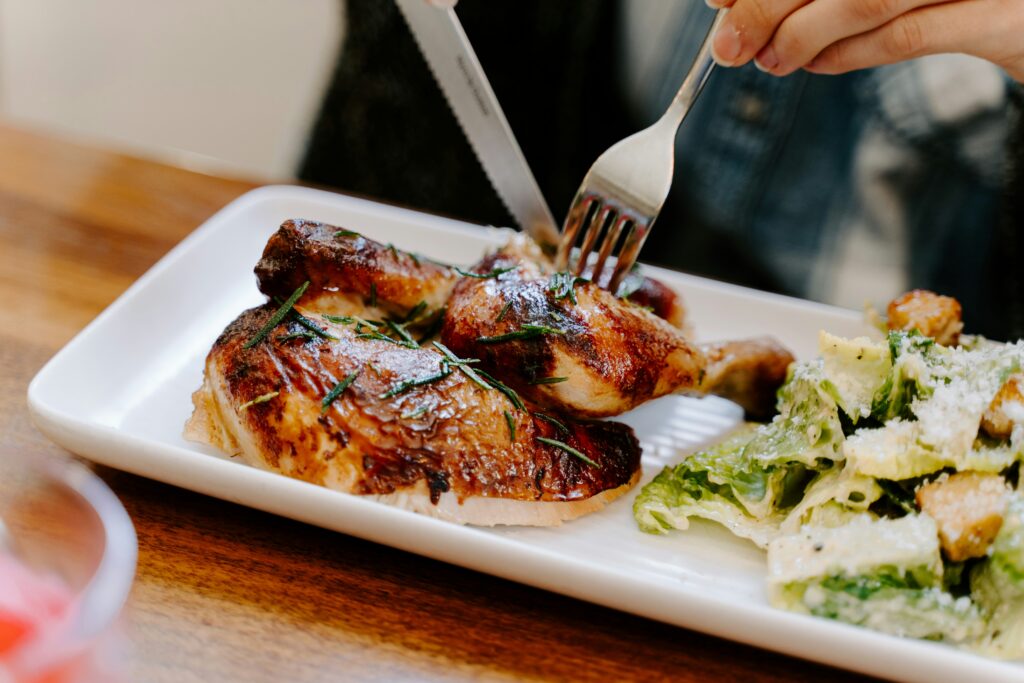
Example for animal-protein eaters: You can easily accomplish this with 2 eggs for breakfast, a ham & cheese sandwich for lunch and a chicken breast for dinner. That is a total of 86 grams* of protein. This is MORE than enough.
This does not even include the protein you would get from bread and any sides you would have with these foods. In fact, 86 grams of protein is enough to meet the new guidelines too (see below).
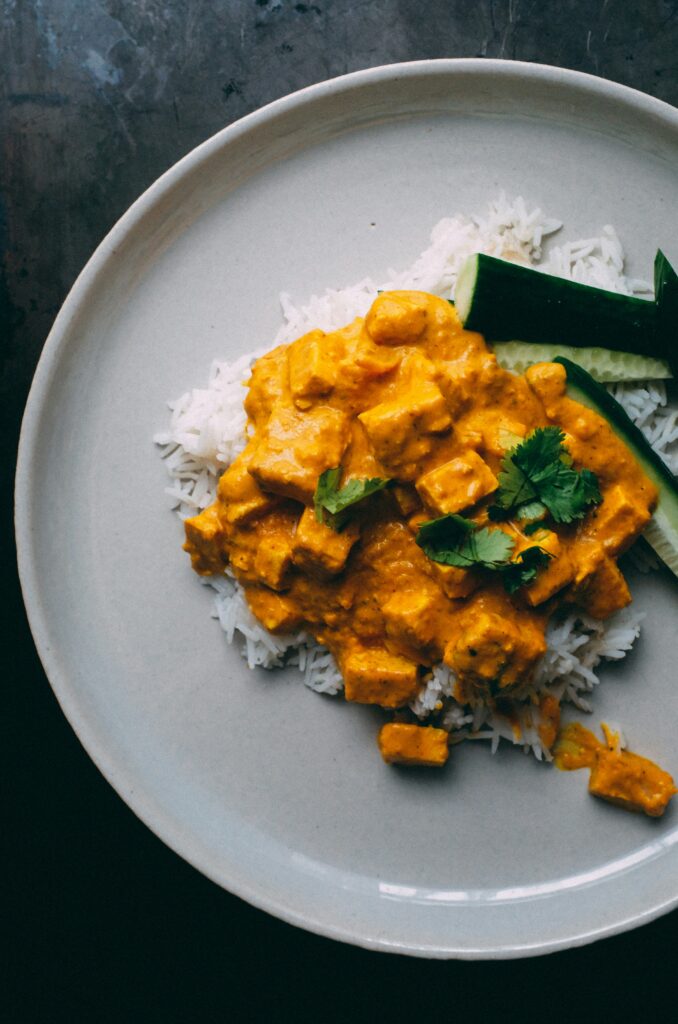
Example for plant-protein eaters: You can easily accomplish this with a breakfast of oatmeal with nuts and seeds, a rice & bean bowl topped with veggies for lunch, and tofu with pasta for dinner. This is a total of 71 grams* of protein. Also plenty.
*This number varies depending on quantity eaten.
New guidelines:
The new guidelines recommend that the average person eat 1.2-1.6 gm/kg per day. This is 80-108 grams of protein per day for 150 pound person.
I don’t think this is all that crazy nor am I that upset about this change. Most people who eat animal-based proteins are likely getting this already (source).
I did a rough estimate of my average protein intake and found I easily get this amount without really trying. All I do is try to have some source of protein with every meal or snack (either animal or plant-based).
The new guidelines may be a little harder to meet on a vegan diet, as the sample menu above did not quite reach the new target. However, it was not far off, and adding an additional serving of plant-based protein could easily help meet the new recommendations.
The biggest problem for most people with increasing their protein intake above the amount listed above is that protein foods might be taking the place of other foods they also need. In other words, if you are just eating chicken and steak for dinner, then you aren’t getting fiber and a wider variety of vitamins and minerals from grains, fruits, and vegetables. These other food groups are important too. There is no hierarchy in food land.
Do I need more protein to build muscle?
You do need to eat enough protein to build muscle. But you also need to lift weights to build muscle. Just eating more protein will NOT increase your muscle mass.
When someone lifts weights regularly, they may need to increase their protein intake because the body uses more protein when repairing muscles that are worked more heavily. Not eating enough protein can prevent you from gaining muscle.
But do you need MORE? It really depends on how much protein you are already eating.
To be clear, if you eat more protein than you need, the body turns it into carbs or fat for storage (source).
In addition, I would NOT go bananas on protein because some research links high protein diets with higher rates of kidney decline (although just sometimes and for some people). And if you have a pre-existing kidney problem, then higher amounts of protein are especially bad for you. (source)
What if I am taking GLP1 drugs? It is true that a common side effect of these drugs is muscle loss. The reality is that anytime someone loses weight, part of that weight loss is muscle loss. This makes eating enough protein especially important.
GLP1 drugs make people feel full more quickly. This means they may not get enough protein. So this DOES make it important to prioritize protein with every meal and snack. But please eat other food groups too. Remember, food land is more of a democracy than a monarchy. Protein is not king.
So what about all these foods with added protein added? Are these foods better?
What is hype and what is not?
I am going to review a handful of products, but there are plenty of other foods that have had a protein makeover that I do not mention. Feel free to reach out if you have a question about a protein product that I do not cover here.
Let’s dive in.
Protein chips – should you switch from regular chips to chips with protein? Are they better for you?
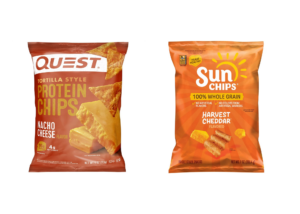 I compared Quest Protein Nacho chips with SunChips Harvest chips. To be clear, this answer might vary depending on which chip you are eating and what you are replacing. For example, if you normally eat an apple with peanut butter for an afternoon snack, but now you are eating protein chips – that’s an entirely different comparison.
But let’s say you replace your regular SunChip snack with Quest protein chips. Is that better? Maybe. Again, it depends on your goal. The main differences between these two chips is that the Harvest chips have a bit more carb and very little protein compared to the Quest chip. Although the reality is that if you eat the serving size of fourteen SunChips, it’s still not that high in carb.
If you have trouble with your blood sugar and every little carb matters, then the protein chip might be a nice option.
But the reality is that chips are not meant to be your meal. They are a snack. It’s fine to get some protein from your snack, just like it is fine to get some carb from your snack. If you prefer the high protein chip, then go for it. Eat what you like.
But if you do not want the first ingredient in your chip to be protein powder and if you prefer not to pay three times as much for protein powder masquerading as a chip, then pass on this one.
Protein oatmeal:
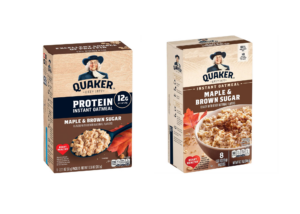 I compared Quaker Maple & Brown Sugar Instant Oatmeal –with protein and without. Both have similar amounts of carbohydrate, fiber and sugar but the packet with added protein has 3 times as much protein. In theory, this is great. You can get a little protein with your breakfast and this will help the carb to give you energy longer. Win win.
Except that if you look a little closer, it is mostly a win for Quaker’s pocketbook. The version with added protein powder costs twice as much. There is no way that adding 8 grams of protein powder warrants that kind of price increase.
You might be better off adding your own protein powder.
I like adding protein to my oatmeal, but personally I prefer to accomplish this by adding a dollop of Greek yogurt, peanut butter, pumpkin seeds and chia seeds OR adding sautéed veggies and a few fried eggs. Granted, this is probably a bit more expensive than the oatmeal with protein powder.
So go with whatever works best for you.
Protein popcorn:
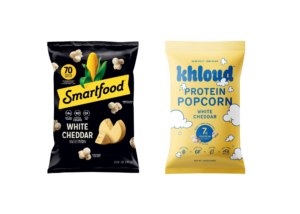
I compared Smartfood White cheddar versus Khloud White Cheddar Protein Popcorn.
These two are nearly the same with the exception of extra protein in the protein brand.
Although to be honest, the extra protein is only 4 grams per serving and you could easily add that yourself (or more) by sprinkling a few tablespoons of nutritional yeast over your popcorn. I am not sure the extra 4 grams warrants the cost being twice as much.
Protein Pop-tarts:
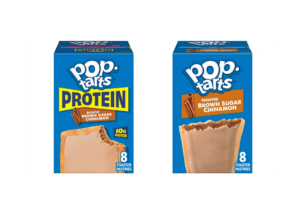 I compared the Pop-tarts Protein Brown Sugar Cinnamon with the non-protein version.
The biggest difference between these two is the cost. You pay nearly twice as much for the extra 5 grams of protein. Is this worth it for a snack if you are already getting enough protein from other foods? Probably not.
Is this worth it if you are a teenager whose only meal for 5 hours is Pop-tarts? Maybe. Or maybe add some trail mix and cheese sticks to your snack drawer instead.
Protein water:
I know I have been a little snarky about many of the products so far. But I nearly fell through the floor on this one.
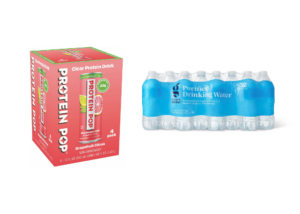 The Protein Pop Citrus Flavoured Water added 22 grams of protein powder to water. WATER. And then they charge you 17 times as much for it than the Target brand purified water costs.
Never mind that for many people, water is free. FREE!
For that price, I do not think we need to add protein to our water. I would rather eat my protein in food form and save my money to buy a new pair of shoes.
If you are someone who eats enough protein at your meals, please pass on this product.
BUT – can I also talk out of two sides of my mouth for a second? As a clinical dietitian, I love this product for a certain population. I have worked with many clients who, for a wide variety of health-related conditions, cannot get enough protein through food. This could be an excellent option for these people. Especially because the protein source is whey, which is a complete protein and easily absorbed.
Protein pasta:
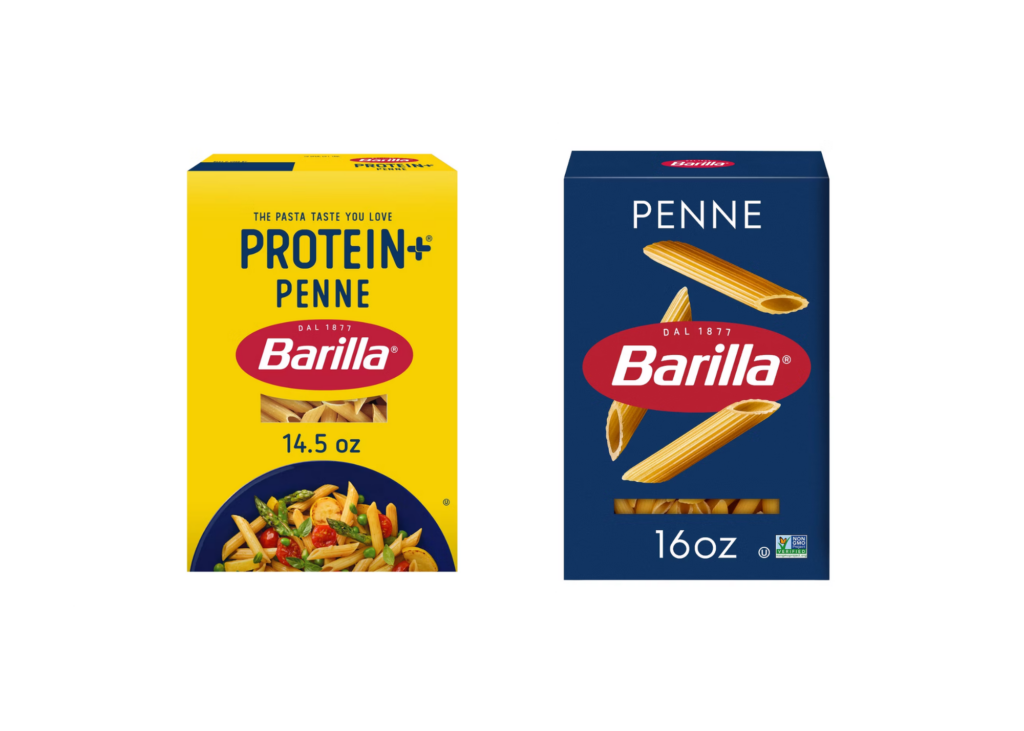
I compared Barilla Penne Protein Pasta versus the non-protein version.
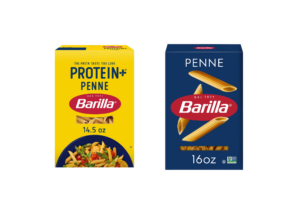 I expected to like this protein product. Historically, I always thought white pasta could use a little more fiber and protein to slow down its absorption and help the energy from the carb stick with you. But I was surprised by what I found.
The protein version only had 3 grams more protein than the regular because the regular pasta already has 7 grams of protein per serving. The protein version does have an additional 2 grams of fiber and a little less carb so this may help someone with blood sugar difficulties, but for the average person I am not sure it is worth paying nearly double. Unless you prefer the taste.
Protein yogurt:
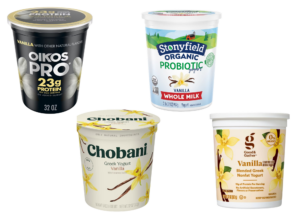 I compared several yogurts because there are so many options. I found most nutrients were similar except for added sugar, protein, and carb. The protein yogurt had the most protein by far.
Oikos PRO vanilla (protein yogurt): This brand was nearly three times as expensive as the Target brand yogurt listed below, but it was highest in protein (25 grams) and lowest in carb (although they did add stevia for sweetness).
Stonyfield Organic Probiotic vanilla yogurt: This yogurt is pretty low in protein (5 grams) and still pretty pricey by comparison to the other yogurts listed here.
Chobani Greek Yogurt – vanilla: This yogurt has far more protein than the Stonyfield yogurt (14 grams) and it accomplishes this without the help of protein powder, but it is still 10 grams less than the protein yogurt.
Target brand (Good & Gather) Vanilla Blended Nonfat Yogurt: This brand is the cheapest and has a similar amount of protein as the Greek yogurt and the least amount of added sugar between the Stonyfield and Greek yogurt.
That’s a lot of data. What’s the takeaway?
Like most things, it depends on your goal. If you want the most protein from your yogurt and don’t mind spending more, then the protein yogurt is a nice option. Although like the oatmeal, it would be easy enough to just add in a little of your own protein powder.
If you want the most protein for your money then the Target brand blended yogurt is an excellent choice.
The regular yogurt is lowest in protein compared to the other three, BUT again you can just add a little protein powder or nuts and seeds if you want to bump it up.
So does the extra protein warrant the cost? Only you, your bank account, and your tastebuds know.
Protein shakes & kids:
Protein shakes have been around for a long time and dietitians frequently recommend them for people who have trouble eating enough food or getting enough protein. There are SO many options and nuances with these shakes and I am not going to get into that here as that warrants an entire blog post on its own.
But the trend I have seen with the protein fad is that many people are giving protein shakes to their kids and brands are capitalizing on this.
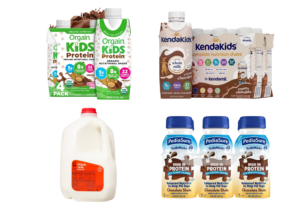 I reviewed three shakes marketed for kids:
- Orgain Kids Protein Shake (24 cents/oz)
- KendaKids (26 cents/oz)
- PediaSure SideKicks (23 cents/oz)
And I compared these against Target brand whole milk (3 cents/oz)
Milk contains about the same amount of protein and calories as these shakes. But if you compare the cost, the difference is astronomical. I cannot say that loud enough.
If you give your kid 8 oz of a protein shake daily you will spend $700 in a year, whereas if you give them milk (which gives them the SAME amount of protein), you will spend $87.
I nearly choked on this difference. That is bank robbery.
In addition, these shakes contain a lot of vitamins and minerals. If you give your kid a daily gummy vitamin, then the shake may be giving them more than they should have.
Also, all three of these shakes contain artificial sweeteners. Yes, stevia is an artificial sweetener. I usually do not recommend that children have artificial sweeteners regularly because of the lack of research on how they impact kids’ health overall (and in my opinion, the health of the gut microbiome).
Kids need milk, but they should not have milk or shakes instead of food. They need the nutrients from food. And they need to learn to eat food. Shakes are not a good replacement for food unless your child has a medical condition and you are working with a dietitian to ensure they get the nutrients they need.
Save your money, give your kid a glass of milk, and make them a sandwich.
The health factor of fad foods with added protein:
One last thing I want to talk about – many people are under the impression that they are buying healthier food when they buy something with added protein. This is by design. Food companies market these new, more expensive foods in such a way that makes you think you are doing your body a favor by eating the food with protein-added.
Don’t fall for it. If you eat protein regularly at your meals, you likely do not need the extra protein powder in these fad foods. In fact, if you eat more protein than your body needs, then your body simply stores it as carb or fat.
And it is a little weird that we are adding protein to everything. Imagine if we infused bagels with omega 3 fats (the food industry will probably start doing this, I am sorry in advance for putting the idea out there). Or imagine if we added carb powder (aka sugar) to Pop-tarts. Oh wait, we already do that, but no one is pretending like it makes the food healthier.
The reality is that these are heavily processed foods. You may not be concerned about this and I am not saying you should be concerned about processed foods – but make no mistake – they are. And they are absolutely lining the wallets of food industry executives.
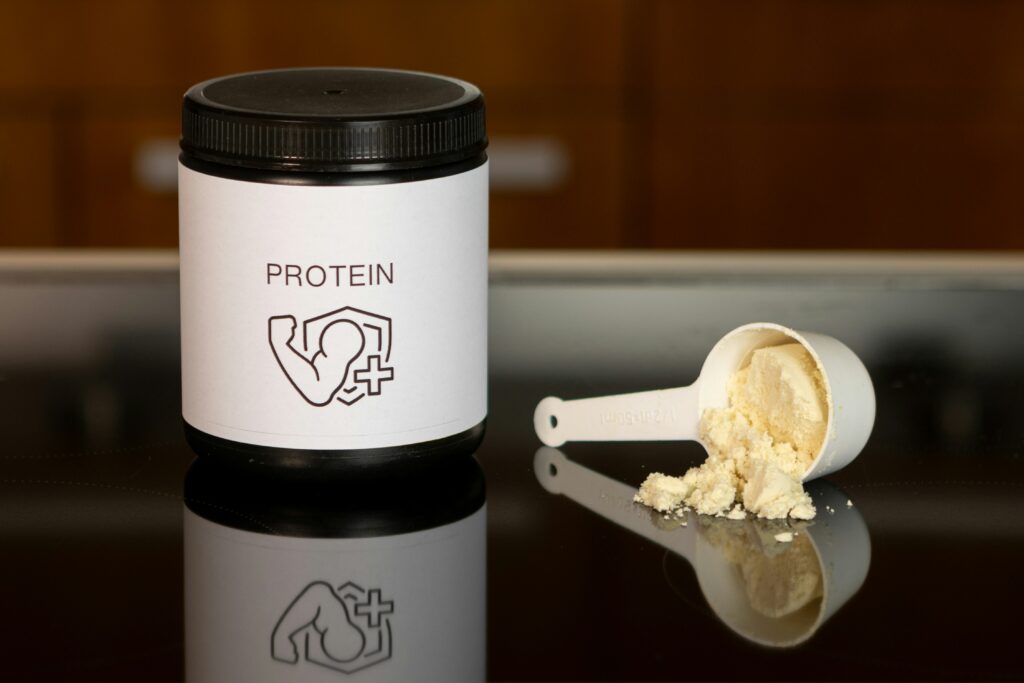
Quick word on protein powder:
First of all, you do NOT need to consume protein powder. I had someone look at me once like I had two heads when I was talking about protein powder and she asked ‘Do I really need to consume protein powder to meet my protein needs? This seems crazy.’
She is right. You do not need protein powder. That would be crazy. You can absolutely get all of your protein from food. It’s not that hard (see section above on ‘How much protein do I need?’.
But if you do find protein powder helpful, then that’s fine too. Powders are easy to mix in with just about anything if you want to bump up the protein.
I won’t get into all the details about plant-protein powder versus whey protein powder (that could be an entire post on its own), but here are a few things to think about when selecting a protein powder if you need a quick way to meet your protein needs:
- Whey protein powder is a complete protein and it is absorbed the best.
- Plant-based protein powders are often incomplete proteins so be sure to better understand which one you are using if you rely on this as a primary source of protein.
- Try to find a protein powder with minimal additives. A lot of these powders are basically vitamins and for most people that is unnecessary (and sometimes harmful), especially if you already take a multivitamin. Here is one of my favorite brands for basic protein powder – whey and plant-based.
One last thing I want to highlight – with the exception of the Barilla pasta, the protein-added foods I reviewed above use whey protein powder. As I mentioned, whey is a complete protein and easily absorbed. That’s a bonus and makes these foods a nice option for someone who struggles to eat protein foods.
But make no mistake, the food industry would like your firstborn child in payment for these foods. And if you struggle to eat protein foods, I would highly recommend that you work with a dietitian to ensure you do not develop nutritional deficiencies.
In summary, we need protein. Please eat it. Whether you get it from plant sources or animal products, your body cannot function without it.
But the truth is that many people in the US get enough protein even without adding cottage cheese to everything. And many people could stand to swap out their chicken with some beans or lentils once in a while.
If you like eating chips with protein, by all means, chomp away. But don’t expect these chips to be your primary source of protein and please don’t feel inferior if you prefer the protein-free chips. Eat what you like. Eat all the food groups. Don’t be weird.
Question: How much protein do I need? Should my kids drink protein shakes? And are protein chips better than regular chips?
Answer:
These are great questions. The American food industry and social media are OBSESSED with protein. You can’t turn around in the grocery store right now without bumping into something with protein added to it.
But don’t be fooled, favoritism is fickle and the winds will change.
But in the meantime – what are we to do with protein? What is fact and what is fiction? Should you eat more? Are chips with protein better for you? What about added protein in oatmeal, yogurt and even water?
I will answer all of these questions and more, but first, what is the deal with our hyperfocus on one nutrient and why do we keep doing that?
Naturally, I think it has to do with diet culture. Surprise, surprise. You may be familiar by now with my tendency to blame diet culture for most of our weirdness when it comes to food.
Diet culture spurs the obsession we have with using our diet to shrink our bodies into a so-called optimal size (aka always smaller) and to ‘fix’ them into optimal health. Diet culture disregards the fact that genetics and a host of social and environmental factors impact our health (source).
Diet culture creeps even further and encourages an obsession with youth and ‘not dying’. In general, I think most Americans have an aversion to thinking or talking about dying, but we also get a little preoccupied with hanging on to our youth.
We often turn to food to crack the code of the fountain of youth and optimal health. Protein currently promises to give us strength, shiny hair, smooth skin, weight loss, and longevity.
In addition to diet culture making us think we should be young and small (sounds so stupid when you say it out loud), the food industry loves to capitalize on any food craze. The food industry knows trends sell. If adding the latest nutrition fad to products gets people to buy more, you can bet it will start showing up everywhere.
I remember when I first encountered tea bags with probiotics. I nearly snorted. I apologize if you like to get your probiotics with your morning tea, but the food industry could care less about effectiveness. Probiotics are living organisms. If you heat a probiotic, you will kill it. If you like drinking dead bacteria with your tea, by all means do not let me stop you, but do not expect it to help your gut health.
I digress.
Between diet culture and the food industry, we will likely continue to cycle through hyped ingredients. But for now, back to our current starlet, protein.
What is protein and why do we care about it?
To be completely transparent, I am a fan of protein and I have been trying to get many of my clients, especially older women, to eat more protein for a long time. It is an important nutrient (one of many) and it helps us with just about every process in the body, including supporting nearly every system in the body.
WHAT PROTEIN DOES
Just about everything. Our bodies are constantly repairing themselves and they need protein to do so. In addition, if we cut ourselves or break a bone, then our body uses protein to put itself back together. Protein helps with hormone regulation, carrying nutrients around the body, and keeping our immune system running. It also helps kids to grow.
Not getting enough protein means you will likely get sick more often and lose muscle mass. Losing muscle mass decreases metabolism and will likely impact your strength and balance over time. Hence my push for some older clients to eat enough protein.
We will get to ‘how much to eat’ in just a minute, but first, let’s discuss food sources of protein.
PROTEIN SOURCES
Understanding proteins as ‘complete vs incomplete’ is crucial to understanding how much protein you should eat and whether or not the protein added to your chips is doing any good. So stick with me here.
Proteins consist of 20 different amino acids. Amino acids are the building blocks of protein. Our body can make 11 of these amino acids so we do not worry about getting them from our diet. But 9 of these amino acids need to come from our food – these are the ‘essential amino acids’.
Complete proteins include all of these 9 essential amino acids. Incomplete proteins do not, although if you eat a combination of incomplete proteins, it can give you all the essential amino acids that you need.
Complete proteins:
- Animal sources: chicken, turkey, beef, dairy, eggs, milk, fish
- Plant sources: soy, quinoa, chia seeds, hemp seeds, buckwheat
Incomplete proteins: beans, peas, lentils, nuts, seeds, whole grains, vegetables
(Source)
SIDE NOTE ON PLANT PROTEIN
I have had clients tell me they get enough protein from vegetables. Maybe. The reality is that if you rely on getting enough protein from spinach alone, you need to eat at least 4-6 cups per meal to get enough. That is a LOT of spinach.
In addition, spinach does not have all of the essential amino acids that your body needs, so trying to get your protein from one vegetable is a fool’s errand.
However, it is true that if you eat a wide variety of vegetables (and lots of them!), you may be getting what you need. BUT I would highly recommend that if you are focused on plant sources of protein, that you include a wide variety of plant-based sources of protein such as beans, soy, seeds, and so on and not rely on vegetables alone for your protein.
If you prefer plant-based sources of protein, there are four things I want you to keep in mind:
- You likely need a B12 supplement. Please talk to your doctor or dietitian about this.
- Variety: It is harder to get enough of the essential amino acids if you primarily focus on plant-based sources of protein. This just means you need to eat a wide variety of plant protein.
- Quantity: You may need more sources of protein than you think. I normally recommend eating between 20-30 grams of protein per meal to ensure you are getting enough. One cup of quinoa contains only 8 grams of protein, so this means eating at least 2 cups of quinoa plus a few other sources of protein at the meal. In addition, plant protein is harder for the body to digest, so you may need more protein overall than someone who eats animal-based proteins.
- Side effects: Plant protein can cause uncomfortable bloating and gas for some people because of the fiber. A client came to me once for significant IBS symptoms and we changed his soy protein intake, added more variety, and his symptoms resolved.
This is not meant to discourage anyone from relying primarily on plant protein. I love plant protein and feel great when I focus on more of these than animal protein. But just know it does take some intentionality to stay well-nourished with plant protein alone although it can be well worth it.
All right, back to protein in general.
HOW PROTEIN IMPACTS HEALTH
I fell down a rabbit hole trying to understand current research on protein recommendations and how quantity and type impact health. To be honest, I came out more confused than I started. There are SO many factors that impact our health and so many factors around how food impacts individual people.
I am going to stay out of the weeds (because, seriously, those weeds will choke you), but essentially what I understand the research to say is exactly what most grandmas have been saying for generations – eat enough protein, but not too much and eat your fruits and vegetables.
In addition, most of us could stand to add in more plant-based whole food sources of protein (aka beans, nuts, soy) because it is pretty clear that plant protein offers heart health benefits (source). And if you eat animal-based protein, keep in mind that what the animal eats matters too.
I would also encourage you to cook once in a while and invite someone to join you. There is a social aspect to our health that we do not fully understand and sharing food is a great way to accomplish this. But that is a whole other soapbox for another time.
HOW MUCH PROTEIN DO I NEED?
The new dietary guidelines have added to the protein hype because they increased the recommendation for how much the average adult needs. There is some controversy around this, but let’s break it down.
Previous guidelines:
Recommended 0.8 gm/kg per day. For a 150-pound person, this is 54 grams of protein per day.
In real life, this is not that hard.
Example for animal-protein eaters: You can easily accomplish this with 2 eggs for breakfast, a ham & cheese sandwich for lunch and a chicken breast for dinner. That is a total of 86 grams* of protein. This is MORE than enough.
This does not even include the protein you would get from bread and any sides you would have with these foods. In fact, 86 grams of protein is enough to meet the new guidelines too (see below).
Example for plant-protein eaters: You can easily accomplish this with a breakfast of oatmeal with nuts and seeds, a rice & bean bowl topped with veggies for lunch, and tofu with pasta for dinner. This is a total of 71 grams* of protein. Also plenty.
*This number varies depending on quantity eaten.
New guidelines:
The new guidelines recommend that the average person eat 1.2-1.6 gm/kg per day. This is 80-108 grams of protein per day for 150 pound person.
I don’t think this is all that crazy nor am I that upset about this change. Most people who eat animal-based proteins are likely getting this already (source).
I did a rough estimate of my average protein intake and found I easily get this amount without really trying. All I do is try to have some source of protein with every meal or snack (either animal or plant-based).
The new guidelines may be a little harder to meet on a vegan diet, as the sample menu above did not quite reach the new target. However, it was not far off, and adding an additional serving of plant-based protein could easily help meet the new recommendations.
The biggest problem for most people with increasing their protein intake above the amount listed above is that protein foods might be taking the place of other foods they also need. In other words, if you are just eating chicken and steak for dinner, then you aren’t getting fiber and a wider variety of vitamins and minerals from grains, fruits, and vegetables. These other food groups are important too. There is no hierarchy in food land.
Do I need more protein to build muscle?
You do need to eat enough protein to build muscle. But you also need to lift weights to build muscle. Just eating more protein will NOT increase your muscle mass.
When someone lifts weights regularly, they may need to increase their protein intake because the body uses more protein when repairing muscles that are worked more heavily. Not eating enough protein can prevent you from gaining muscle.
But do you need MORE? It really depends on how much protein you are already eating.
To be clear, if you eat more protein than you need, the body turns it into carbs or fat for storage (source).
In addition, I would NOT go bananas on protein because some research links high protein diets with higher rates of kidney decline (although just sometimes and for some people). And if you have a pre-existing kidney problem, then higher amounts of protein are especially bad for you. (source)
What if I am taking GLP1 drugs? It is true that a common side effect of these drugs is muscle loss. The reality is that anytime someone loses weight, part of that weight loss is muscle loss. This makes eating enough protein especially important.
GLP1 drugs make people feel full more quickly. This means they may not get enough protein. So this DOES make it important to prioritize protein with every meal and snack. But please eat other food groups too. Remember, food land is more of a democracy than a monarchy. Protein is not king.
So what about all these foods with added protein added? Are these foods better?
What is hype and what is not?
I am going to review a handful of products, but there are plenty of other foods that have had a protein makeover that I do not mention. Feel free to reach out if you have a question about a protein product that I do not cover here.
Let’s dive in.
Protein chips – should you switch from regular chips to chips with protein? Are they better for you?
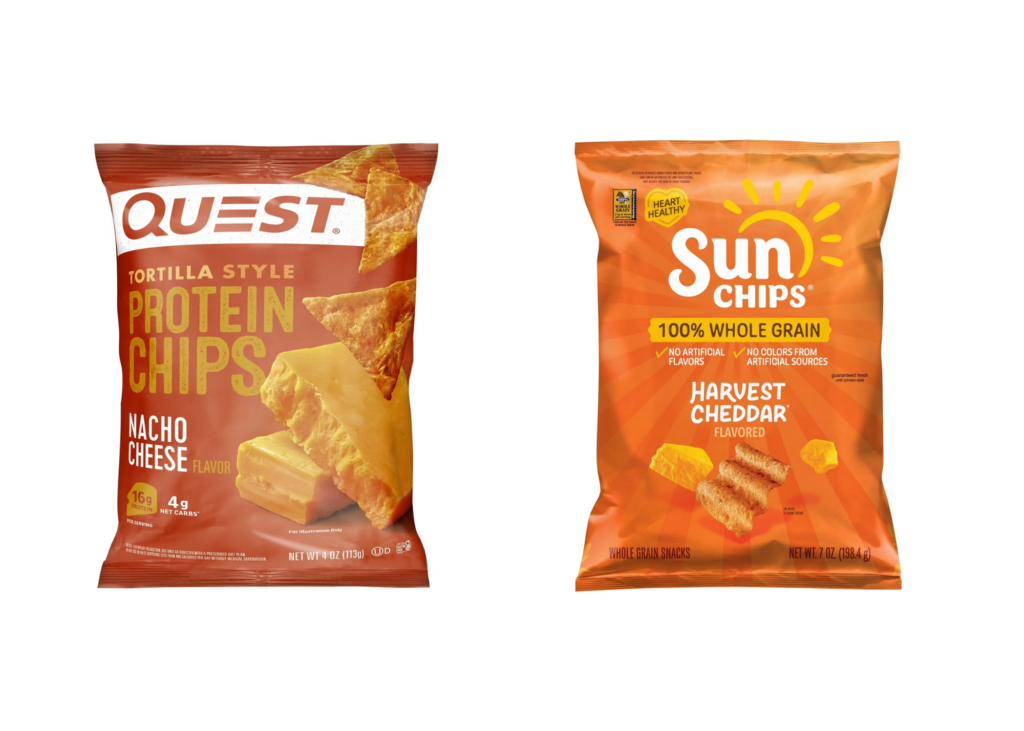 I compared Quest Protein Nacho chips with SunChips Harvest chips. To be clear, this answer might vary depending on which chip you are eating and what you are replacing. For example, if you normally eat an apple with peanut butter for an afternoon snack, but now you are eating protein chips – that’s an entirely different comparison.
But let’s say you replace your regular SunChip snack with Quest protein chips. Is that better? Maybe. Again, it depends on your goal. The main differences between these two chips is that the Harvest chips have a bit more carb and very little protein compared to the Quest chip. Although the reality is that if you eat the serving size of fourteen SunChips, it’s still not that high in carb.
If you have trouble with your blood sugar and every little carb matters, then the protein chip might be a nice option.
But the reality is that chips are not meant to be your meal. They are a snack. It’s fine to get some protein from your snack, just like it is fine to get some carb from your snack. If you prefer the high protein chip, then go for it. Eat what you like.
But if you do not want the first ingredient in your chip to be protein powder and if you prefer not to pay three times as much for protein powder masquerading as a chip, then pass on this one.
Protein oatmeal:
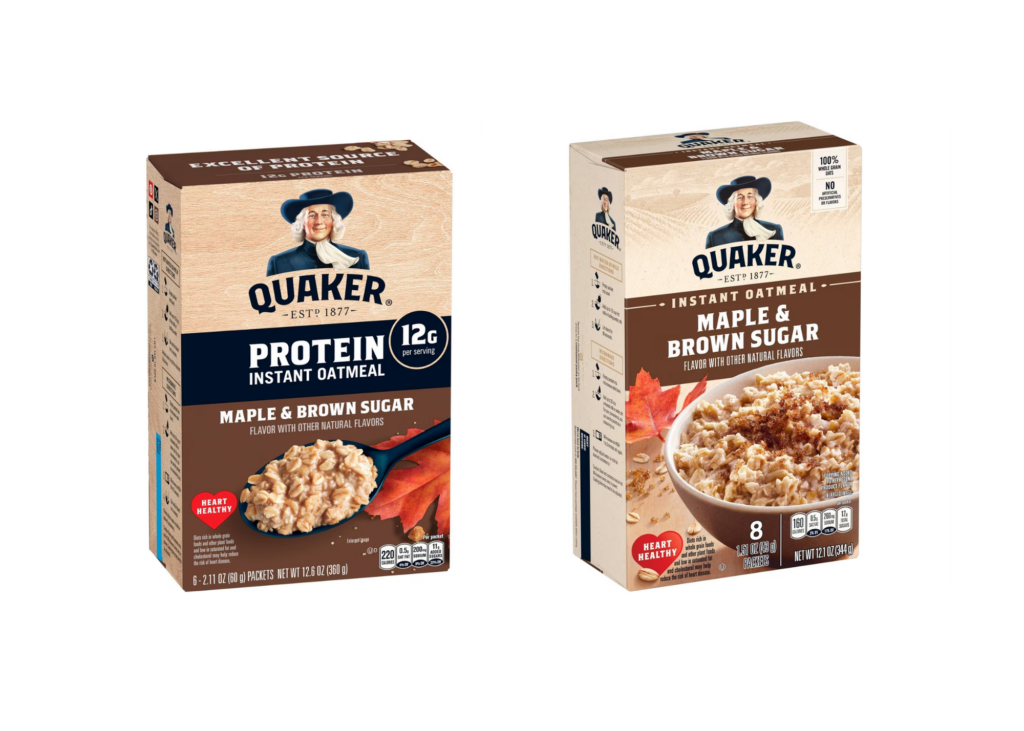 I compared Quaker Maple & Brown Sugar Instant Oatmeal –with protein and without. Both have similar amounts of carbohydrate, fiber and sugar but the packet with added protein has 3 times as much protein. In theory, this is great. You can get a little protein with your breakfast and this will help the carb to give you energy longer. Win win.
Except that if you look a little closer, it is mostly a win for Quaker’s pocketbook. The version with added protein powder costs twice as much. There is no way that adding 8 grams of protein powder warrants that kind of price increase.
You might be better off adding your own protein powder.
I like adding protein to my oatmeal, but personally I prefer to accomplish this by adding a dollop of Greek yogurt, peanut butter, pumpkin seeds and chia seeds OR adding sautéed veggies and a few fried eggs. Granted, this is probably a bit more expensive than the oatmeal with protein powder.
So go with whatever works best for you.
Protein popcorn:
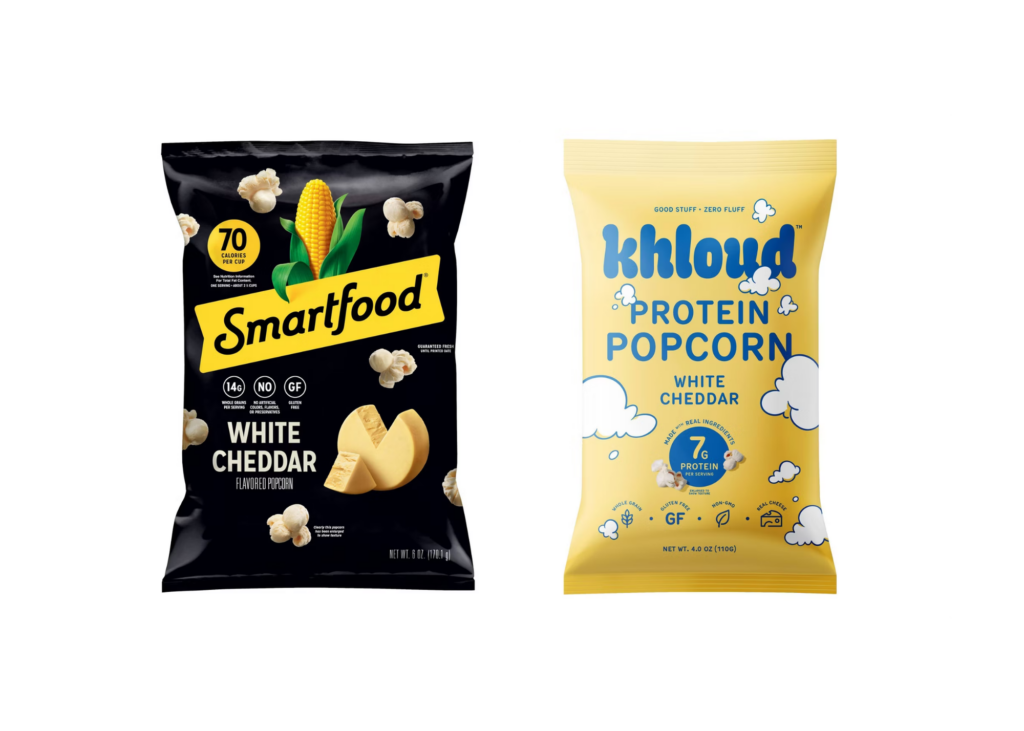
I compared Smartfood White cheddar versus Khloud White Cheddar Protein Popcorn.
These two are nearly the same with the exception of extra protein in the protein brand.
Although to be honest, the extra protein is only 4 grams per serving and you could easily add that yourself (or more) by sprinkling a few tablespoons of nutritional yeast over your popcorn. I am not sure the extra 4 grams warrants the cost being twice as much.
Protein Pop-tarts:
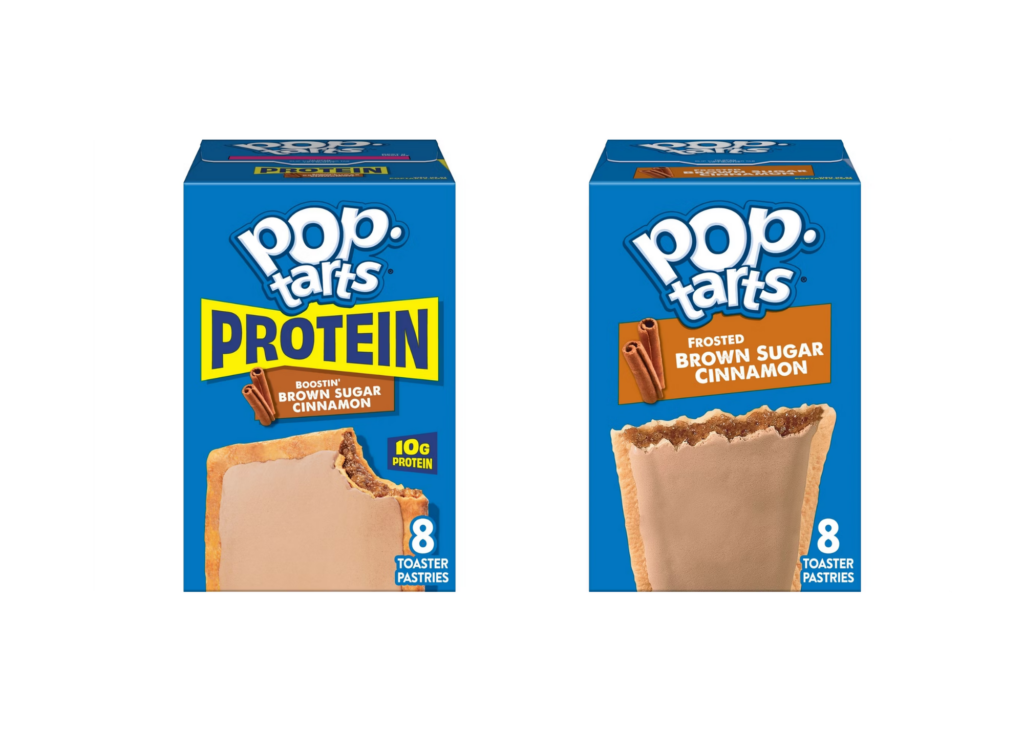 I compared the Pop-tarts Protein Brown Sugar Cinnamon with the non-protein version.
The biggest difference between these two is the cost. You pay nearly twice as much for the extra 5 grams of protein. Is this worth it for a snack if you are already getting enough protein from other foods? Probably not.
Is this worth it if you are a teenager whose only meal for 5 hours is Pop-tarts? Maybe. Or maybe add some trail mix and cheese sticks to your snack drawer instead.
Protein water:
I know I have been a little snarky about many of the products so far. But I nearly fell through the floor on this one.
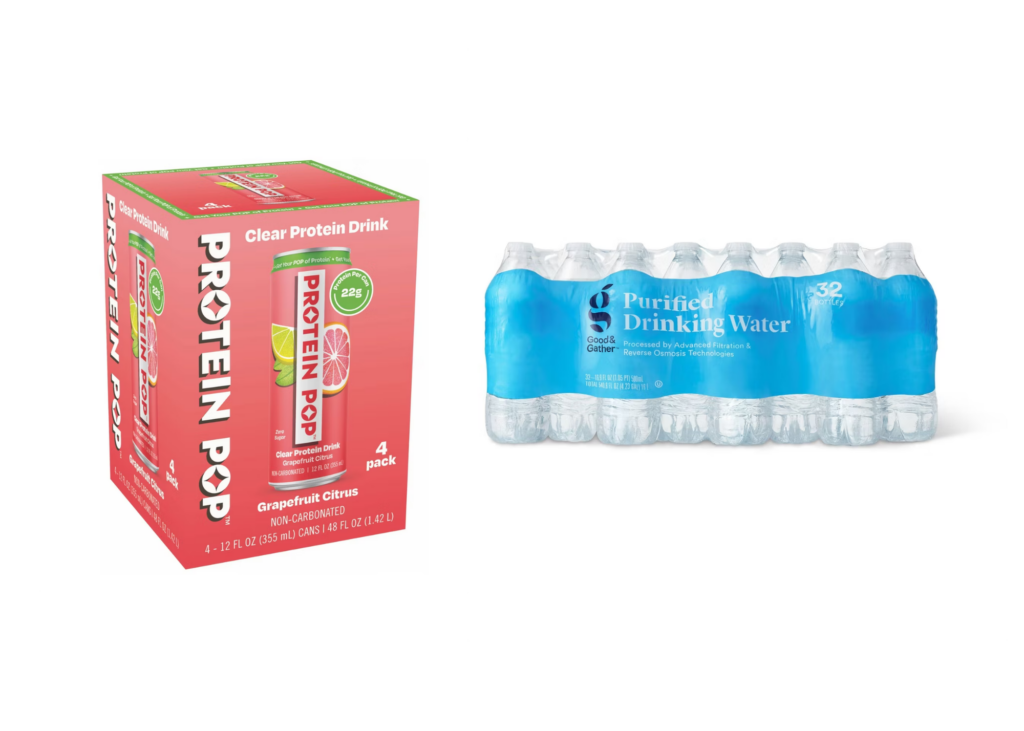 The Protein Pop Citrus Flavoured Water added 22 grams of protein powder to water. WATER. And then they charge you 17 times as much for it than the Target brand purified water costs.
Never mind that for many people, water is free. FREE!
For that price, I do not think we need to add protein to our water. I would rather eat my protein in food form and save my money to buy a new pair of shoes.
If you are someone who eats enough protein at your meals, please pass on this product.
BUT – can I also talk out of two sides of my mouth for a second? As a clinical dietitian, I love this product for a certain population. I have worked with many clients who, for a wide variety of health-related conditions, cannot get enough protein through food. This could be an excellent option for these people. Especially because the protein source is whey, which is a complete protein and easily absorbed.
Protein pasta:
I compared Barilla Penne Protein Pasta versus the non-protein version.
 I expected to like this protein product. Historically, I always thought white pasta could use a little more fiber and protein to slow down its absorption and help the energy from the carb stick with you. But I was surprised by what I found.
The protein version only had 3 grams more protein than the regular because the regular pasta already has 7 grams of protein per serving. The protein version does have an additional 2 grams of fiber and a little less carb so this may help someone with blood sugar difficulties, but for the average person I am not sure it is worth paying nearly double. Unless you prefer the taste.
Protein yogurt:
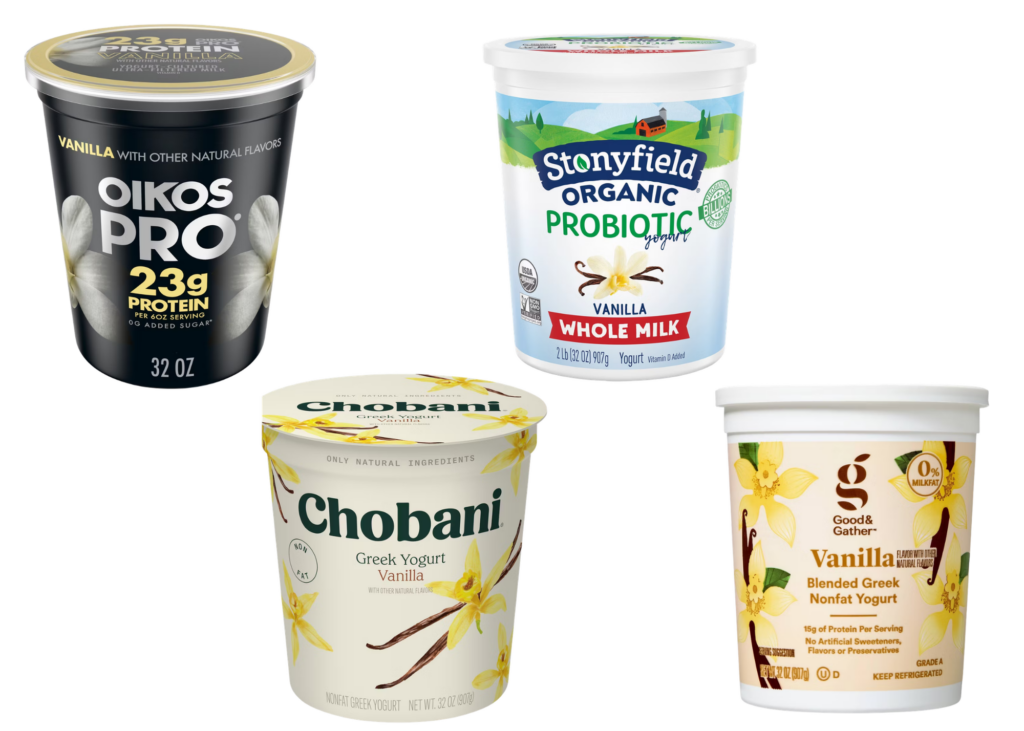 I compared several yogurts because there are so many options. I found most nutrients were similar except for added sugar, protein, and carb. The protein yogurt had the most protein by far.
Oikos PRO vanilla (protein yogurt): This brand was nearly three times as expensive as the Target brand yogurt listed below, but it was highest in protein (25 grams) and lowest in carb (although they did add stevia for sweetness).
Stonyfield Organic Probiotic vanilla yogurt: This yogurt is pretty low in protein (5 grams) and still pretty pricey by comparison to the other yogurts listed here.
Chobani Greek Yogurt – vanilla: This yogurt has far more protein than the Stonyfield yogurt (14 grams) and it accomplishes this without the help of protein powder, but it is still 10 grams less than the protein yogurt.
Target brand (Good & Gather) Vanilla Blended Nonfat Yogurt: This brand is the cheapest and has a similar amount of protein as the Greek yogurt and the least amount of added sugar between the Stonyfield and Greek yogurt.
That’s a lot of data. What’s the takeaway?
Like most things, it depends on your goal. If you want the most protein from your yogurt and don’t mind spending more, then the protein yogurt is a nice option. Although like the oatmeal, it would be easy enough to just add in a little of your own protein powder.
If you want the most protein for your money then the Target brand blended yogurt is an excellent choice.
The regular yogurt is lowest in protein compared to the other three, BUT again you can just add a little protein powder or nuts and seeds if you want to bump it up.
So does the extra protein warrant the cost? Only you, your bank account, and your tastebuds know.
Protein shakes & kids:
Protein shakes have been around for a long time and dietitians frequently recommend them for people who have trouble eating enough food or getting enough protein. There are SO many options and nuances with these shakes and I am not going to get into that here as that warrants an entire blog post on its own.
But the trend I have seen with the protein fad is that many people are giving protein shakes to their kids and brands are capitalizing on this.
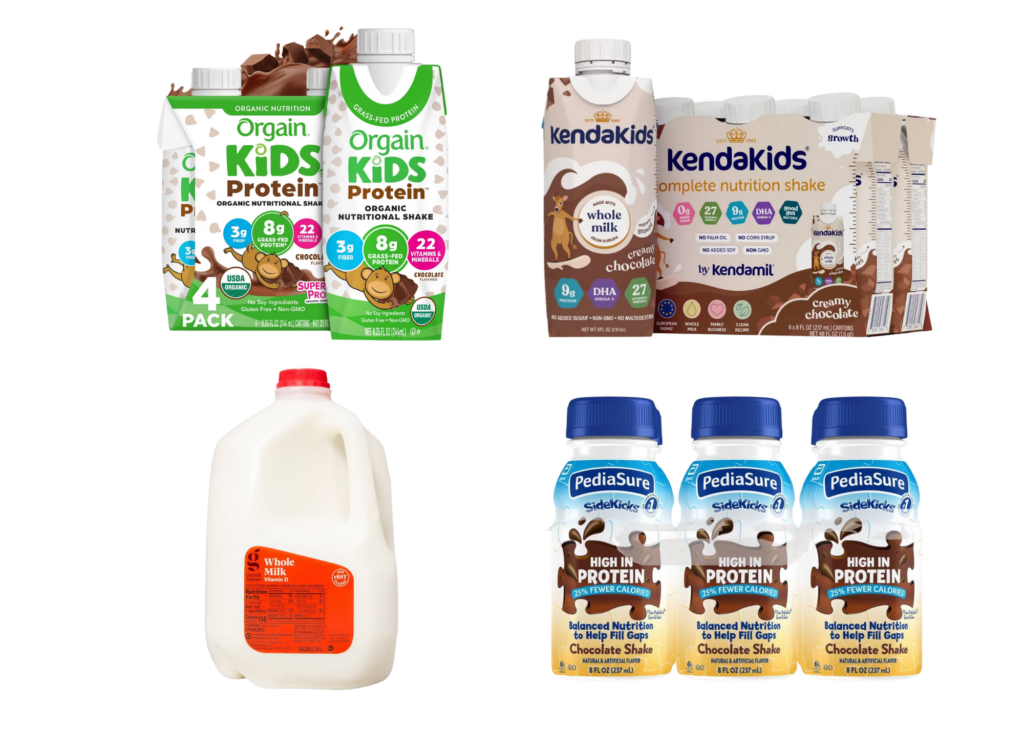 I reviewed three shakes marketed for kids:
- Orgain Kids Protein Shake (24 cents/oz)
- KendaKids (26 cents/oz)
- PediaSure SideKicks (23 cents/oz)
And I compared these against Target brand whole milk (3 cents/oz)
Milk contains about the same amount of protein and calories as these shakes. But if you compare the cost, the difference is astronomical. I cannot say that loud enough.
If you give your kid 8 oz of a protein shake daily you will spend $700 in a year, whereas if you give them milk (which gives them the SAME amount of protein), you will spend $87.
I nearly choked on this difference. That is bank robbery.
In addition, these shakes contain a lot of vitamins and minerals. If you give your kid a daily gummy vitamin, then the shake may be giving them more than they should have.
Also, all three of these shakes contain artificial sweeteners. Yes, stevia is an artificial sweetener. I usually do not recommend that children have artificial sweeteners regularly because of the lack of research on how they impact kids’ health overall (and in my opinion, the health of the gut microbiome).
Kids need milk, but they should not have milk or shakes instead of food. They need the nutrients from food. And they need to learn to eat food. Shakes are not a good replacement for food unless your child has a medical condition and you are working with a dietitian to ensure they get the nutrients they need.
Save your money, give your kid a glass of milk, and make them a sandwich.
The health factor of fad foods with added protein:
One last thing I want to talk about – many people are under the impression that they are buying healthier food when they buy something with added protein. This is by design. Food companies market these new, more expensive foods in such a way that makes you think you are doing your body a favor by eating the food with protein-added.
Don’t fall for it. If you eat protein regularly at your meals, you likely do not need the extra protein powder in these fad foods. In fact, if you eat more protein than your body needs, then your body simply stores it as carb or fat.
And it is a little weird that we are adding protein to everything. Imagine if we infused bagels with omega 3 fats (the food industry will probably start doing this, I am sorry in advance for putting the idea out there). Or imagine if we added carb powder (aka sugar) to Pop-tarts. Oh wait, we already do that, but no one is pretending like it makes the food healthier.
The reality is that these are heavily processed foods. You may not be concerned about this and I am not saying you should be concerned about processed foods – but make no mistake – they are. And they are absolutely lining the wallets of food industry executives.
Quick word on protein powder:
First of all, you do NOT need to consume protein powder. I had someone look at me once like I had two heads when I was talking about protein powder and she asked ‘Do I really need to consume protein powder to meet my protein needs? This seems crazy.’
She is right. You do not need protein powder. That would be crazy. You can absolutely get all of your protein from food. It’s not that hard (see section above on ‘How much protein do I need?’.
But if you do find protein powder helpful, then that’s fine too. Powders are easy to mix in with just about anything if you want to bump up the protein.
I won’t get into all the details about plant-protein powder versus whey protein powder (that could be an entire post on its own), but here are a few things to think about when selecting a protein powder if you need a quick way to meet your protein needs:
- Whey protein powder is a complete protein and it is absorbed the best.
- Plant-based protein powders are often incomplete proteins so be sure to better understand which one you are using if you rely on this as a primary source of protein.
- Try to find a protein powder with minimal additives. A lot of these powders are basically vitamins and for most people that is unnecessary (and sometimes harmful), especially if you already take a multivitamin. Here is one of my favorite brands for basic protein powder – whey and plant-based.
One last thing I want to highlight – with the exception of the Barilla pasta, the protein-added foods I reviewed above use whey protein powder. As I mentioned, whey is a complete protein and easily absorbed. That’s a bonus and makes these foods a nice option for someone who struggles to eat protein foods.
But make no mistake, the food industry would like your firstborn child in payment for these foods. And if you struggle to eat protein foods, I would highly recommend that you work with a dietitian to ensure you do not develop nutritional deficiencies.
In summary, we need protein. Please eat it. Whether you get it from plant sources or animal products, your body cannot function without it.
But the truth is that many people in the US get enough protein even without adding cottage cheese to everything. And many people could stand to swap out their chicken with some beans or lentils once in a while.
If you like eating chips with protein, by all means, chomp away. But don’t expect these chips to be your primary source of protein and please don’t feel inferior if you prefer the protein-free chips. Eat what you like. Eat all the food groups. Don’t be weird.